

Last Updated: November 1, 2026
Quick Summary
To find reliable junk haulers, verify their business license and a current certificate of insurance covering general liability and workers’ compensation, confirm disposal and recycling practices, and compare written all-in quotes. Never let a crew start loading until you have a written price that includes labor, disposal and fees.
- Ask every hauler for a business license and a current certificate of insurance before booking.
- Call the insurer on the certificate to confirm the policy is active and covers your job.
- Ask where your items go and whether they are recycled or donated.
- Require a written estimate with an itemized volume tier, labor, disposal fees and travel charges.
- Walk away from any company that refuses to put its quote and terms in writing.
Table of Contents
- Why Choosing the Right Junk Hauler Matters
- Step 1: Verify Licensing and Insurance
- Step 2: Check Disposal, Recycling, and Donation Practices
- Step 3: Compare Written Quotes and Spot Hidden Fees
- Red Flags and Scam Warning Signs
- Questions to Ask Junk Removal Companies Before Booking
- Choosing a Hauler for Your Specific Job
- Booking Your Junk Removal With Arizona Junk Monkey
- Frequently Asked Questions
Why Choosing the Right Junk Hauler Matters
Choosing a junk hauler is more than booking a truck, and the right junk haulers protect your property as well as your budget.
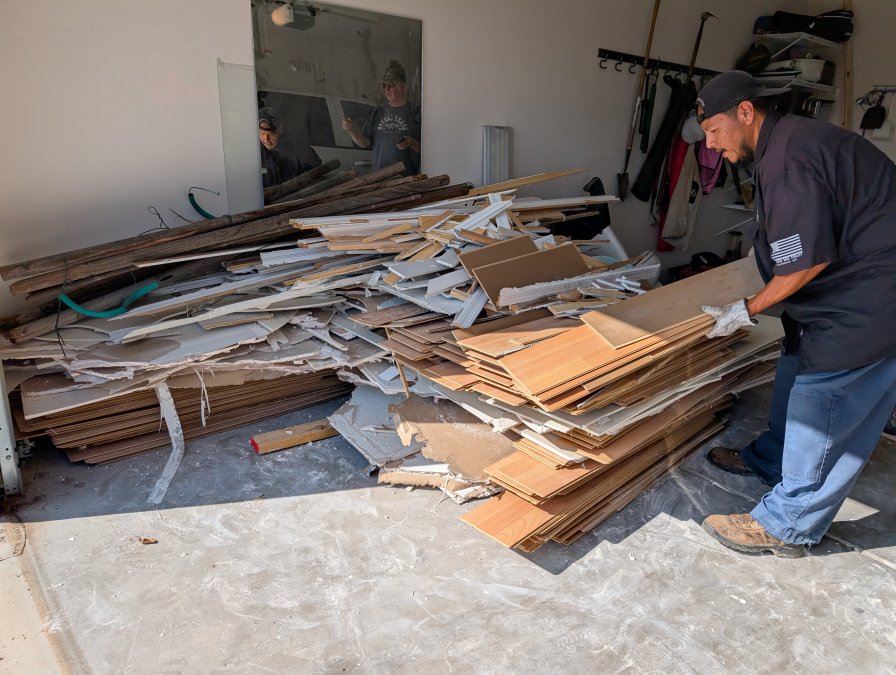
A reliable hauler protects your property, your wallet and your liability. A bad one can cost you all three. Junk haulers are not all regulated the same way, so the burden of checking falls on you. The steps below give you a practical way to do that before you hand over the keys to your garage.
Step 1: Verify Licensing and Insurance
Start with paperwork. Ask every hauler for their business license, their state or local registration, and a current certificate of insurance. A legitimate company will send these without hesitation.
Call the insurer listed on the certificate to confirm the policy is active. Check the policy dates and make sure the coverage covers the work you are asking them to do.
What General Liability and Workers’ Compensation Cover
General liability insurance pays if a crew member damages your property, such as a scratched floor or a dented doorframe. Workers’ compensation covers injuries to the crew while they work on your site. Without it, an injured worker may try to make a claim against you as the property owner.
Ask for both. A hauler that carries only one has left a gap you will pay for if something goes wrong.
Step 2: Check Disposal, Recycling, and Donation Practices
Ask where your items will go before the truck leaves. A reputable hauler should be able to name the transfer station, recycling facility or donation center it uses.
Many families want to donate usable furniture. Ask whether the company passes items to local charities and whether it will give you a receipt. If the answer is vague, assume most of your load goes to a landfill.
Step 3: Compare Written Quotes and Spot Hidden Fees
Many junk hauling quotes are built on volume, not weight or time, so two companies can quote the same pile at different prices. To compare fairly, you need to understand how the number was assembled and force each provider onto the same written template.
How Junk Removal Pricing Is Actually Built
Junk hauling quotes often combine several components:
- Volume, the truck space your load occupies. Ask each provider to state the volume in cubic yards or truck fraction, not just a dollar figure.
- Labor, crew size and hours, plus any surcharge for carrying items from upper floors or long carries.
- Disposal and specialty fees, per-item charges for items that require special handling. These vary by facility and are a common source of surprise charges.
- Travel and access, trip charges, stair or elevator fees, and gate or parking constraints.
A phone estimate usually covers only the volume tier. That is why the final invoice can exceed the quote.
What a Written Estimate Should Contain
Ask each company to email or text an estimate that includes the following. If any item is missing, ask for it in writing before you compare:
- Company legal name, business address, and a contact phone number
- Itemized volume tier, labor, disposal fees, and travel/access charges
- A list of items or materials excluded from the quote
- Whether the price is a flat rate or an hourly rate with a minimum
- Payment terms, deposit required, accepted methods, and when payment is due
- Cancellation and rescheduling terms
- The date the quote expires
Build a simple comparison sheet with one column per company and one row per line item above. The lowest total is not always the best value, a quote that omits disposal fees is not comparable to one that includes them.
Hidden-Fee Patterns to Watch
- Per-item surcharges added after loading, the crew reclassifies items as “specialty” once they are on the truck. Prevent this by listing every item you expect to discard in the written quote.
- “Hazardous” reclassification, paint, batteries, and fluorescent tubes genuinely require special handling, but the definition should be agreed in advance, not at the curb.
- Stair and long-carry fees, confirm the threshold in writing (for example, “no stair fee for first flight; $X per additional flight”).
- Fuel or environmental surcharges, these should appear on the estimate, not the final bill.
- Minimum charges, some companies have a minimum load charge even if your pile is small. Ask for the minimum before booking.
Compare Totals, Not Rates
An hourly rate with a minimum and a separate disposal fee can cost more than a flat-rate quote for the same load. Convert every quote to an all-in total for your specific inventory, then compare. If a provider will not put the all-in total in writing, treat that as a disqualifier rather than a negotiating point.
Never let a crew begin loading until you have a signed or written-confirmed quote that states the all-in price and the conditions that could change it. Verbal assurances are not enforceable.
The article lists what a written junk removal estimate should contain, so you can compare providers on the same terms.
| Estimate item | What to check | Why it matters |
|---|---|---|
| Volume tier | Stated in cubic yards or truck fraction | Phone quotes often cover only volume |
| Labor | Crew size, hours, and any upper-floor or long-carry surcharge | Adds cost beyond the volume tier |
| Disposal and specialty fees | Per-item charges for special handling | A common source of surprise charges |
| Travel and access | Trip, stair, elevator, gate or parking fees | Can push the final invoice above the quote |
| Pricing basis | Flat rate or hourly rate with a minimum | Determines how the total is calculated |
| Quote expiry | Date the estimate stops being valid | Prevents pricing changes after loading |
Red Flags and Scam Warning Signs
Most junk hauling scams follow a small number of repeatable patterns. Knowing the mechanics lets you spot the setup before the truck is loaded, when you still have leverage.
The Three Most Common Scam Patterns
1. Bait-and-switch on volume. The phone quote is deliberately low because it assumes a smaller load than you described.
2. Deposit-and-disappear. The company collects a deposit or full prepayment, then cancels, reschedules repeatedly, or stops answering. Defense: avoid full prepayment, and confirm the company has a verifiable physical address.
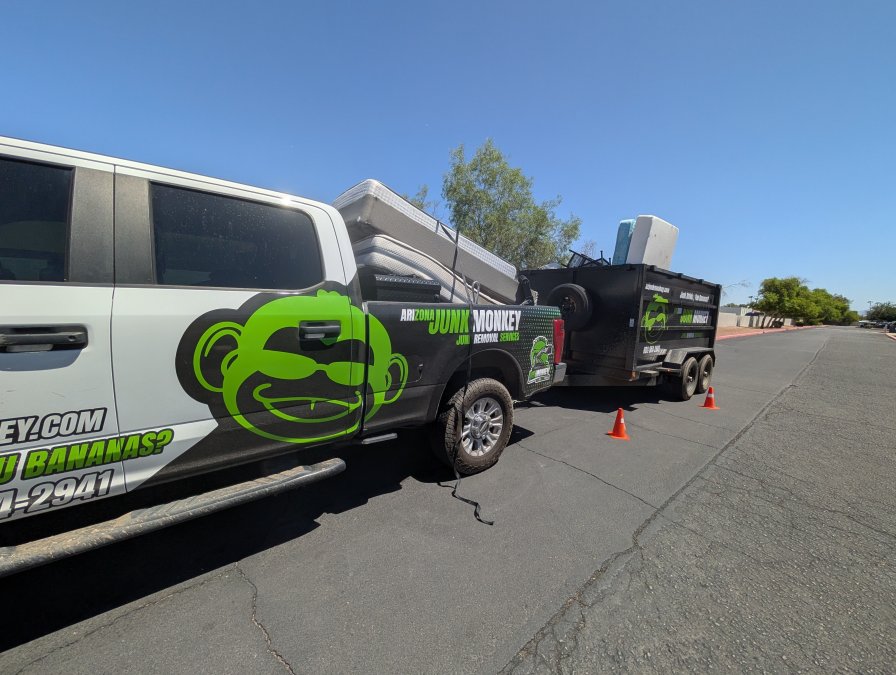
3. Unlicensed crew, no insurance. The crew arrives in an unmarked truck, cannot produce a certificate of insurance, and offers a cash discount.
A Quick Verification Protocol
Run these checks in order before you book. Each takes minutes and closes off a common scam path:
- Confirm the business identity. Search the company name and phone number; look for a consistent address and a website that matches. A phone number that appears only in classified ads is a warning sign.
- Request the certificate of insurance. Ask for general liability and workers’ compensation, then call the insurer listed on the certificate to confirm the policy is active and the dates cover your appointment.
- Check the registration. Ask for the business license or state/local registration number and verify it with the issuing agency.
- Get the all-in price in writing. See the quote section above for what the written estimate must contain.
- Confirm payment terms. No full prepayment; credit card accepted; receipt provided at completion.
- Confirm disposal destination. A legitimate hauler can name the transfer station, recycling facility, or donation center it uses.
If any single check fails and the company will not resolve it in writing, walk away. There are enough legitimate haulers that you do not need to accept unresolved risk.
Red Flags at the Doorstep
- The truck is unmarked or the crew cannot name the company they work for
- The quoted price changes after loading begins
- The crew asks for cash only and offers no receipt
- The crew pressures you to decide immediately or claims the price is “today only”
- The company refuses to put the quote or terms in writing
If Something Goes Wrong
Document the written quote, the final invoice, photos of the load, and any text or email exchanges. If a crew demands more than the written price after loading, do not pay the difference under pressure; ask for the owner or manager in writing and keep the vehicle and crew information. Disputes over bait-and-switch pricing are far easier to resolve when you have the written estimate and a credit card record.
Questions to Ask Junk Removal Companies Before Booking
Before you book, ask these questions and listen to the answers:
- Are you licensed and insured, and can you send the certificate today?
- Does your quote include labor, disposal and all taxes or fees?
- Where do you take the material, and what share is recycled or donated?
- Will your crew carry items from my garage or upper floor without extra charge?
- Do you charge extra for appliances, mattresses or hazardous materials?
- What happens if the final load is heavier or larger than the estimate?
A straight answer to each question is a good sign. Hesitation on any of them is worth a second look.
Choosing a Hauler for Your Specific Job
The right hauler depends on the job. For a single garage cleanout, a small local crew with a clear flat rate often works well.
Contractors clearing construction debris should confirm the company accepts construction material and can schedule around the job site. Elderly residents moving heavy appliances should ask whether the crew will carry items out and how they handle stairs.
Arizona Junk Monkey Removal Services offers junk removal and dumpster rental for residential and commercial clients. If your job is a property clean out, an appliance removal, or a residential dumpster rental, match the company to the work before you book.
Booking Your Junk Removal With Arizona Junk Monkey
Once you have checked licensing, insurance, disposal practices and written quotes, you are ready to book. Arizona Junk Monkey Removal Services is a local, family-owned business that is licensed and insured, and offers no-obligation estimates.
Are you ready to free up some space? Contact Arizona Junk Monkey today, or call or text (602) 554-2941 for a quote.
Frequently Asked Questions
What should I look for when hiring a junk removal service?
Start with proof of licensing and general liability insurance, and ask for it in writing before the crew arrives. Confirm the company gives a written, itemized quote that includes labor, loading, and disposal fees. Ask how items are disposed of, whether they donate or recycle usable materials, . A company that answers these questions directly and without pressure is usually a safer bet than one that quotes by phone only and avoids putting details in writing.
Are junk removal services licensed and insured?
Reputable junk haulers carry a business license and general liability insurance, and many also carry workers’ compensation coverage for their crews. Ask for a certificate of insurance and confirm the policy is active before booking. If a hauler cannot show proof of coverage, you may be responsible for damage to your property or injuries to workers on your site. Check the certificate’s dates and make sure the named insured matches the company you are hiring.
How do junk removal companies calculate their prices?
Most haulers price by volume, meaning the share of a truck the load fills, though some also factor in labor time, stairs, or access difficulty. Heavy items such as appliances, concrete, or dirt may carry separate surcharges, and disposal fees can be added to the base price. Pricing depends on quantity, dates, and delivery details, so request a quote based on your specific items and location. Ask whether the quote is guaranteed or an estimate that could change on arrival.
Is it better to rent a dumpster or hire a full-service junk hauler?
A dumpster works well if you have a large project, plenty of space for the container, and you are willing to load it yourself. A full-service hauler is usually the better choice when you need items removed quickly, have heavy or awkward pieces, or cannot physically load the material. Compare the total cost of each option, including permit fees for placing a dumpster on a public street, before deciding.