


Table of Contents
- What Construction Debris Removal Involves
- Dumpster Rental vs. Junk Removal for Contractors
- Building a Construction Waste Management Plan
- Understanding Cost of Construction Debris Removal Per Cubic Yard
- OSHA Construction Site Cleanup Regulations and Safety
- Sorting, Recycling, and Disposal Best Practices
- Choosing the Right Service for Your Project
- Frequently Asked Questions
Last Updated: September 27, 2026
What Construction Debris Removal Involves
Construction debris removal is the process of collecting, sorting, and disposing of waste materials generated during building, renovation, or demolition projects. For contractors, managing construction debris removal efficiently affects project timelines, budget accuracy, and compliance with local disposal regulations.
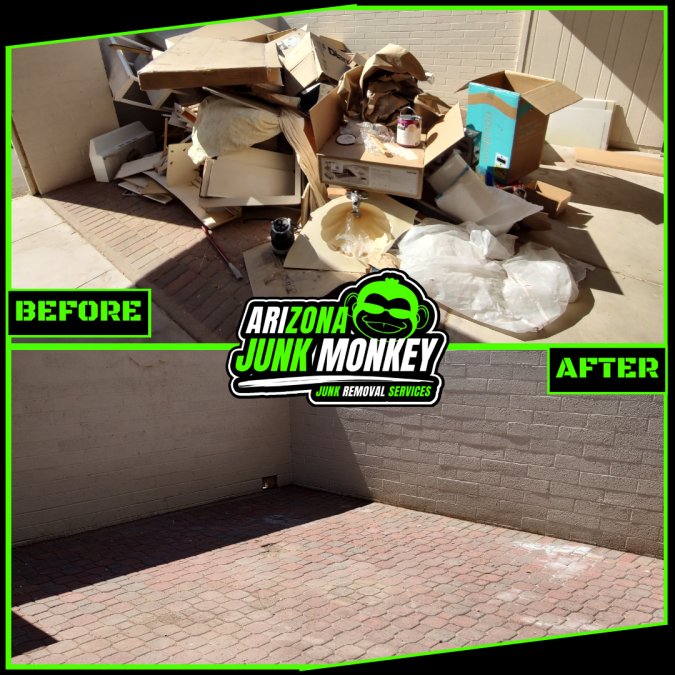
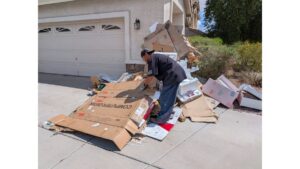
Construction debris removal involves understanding what materials can be recycled, what requires special handling, and how to minimize disposal costs. Contractors must account for removal logistics when estimating project costs and schedules.
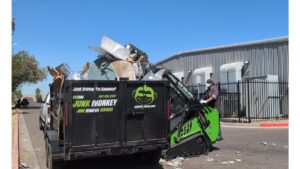
Arizona Junk Monkey Removal Services handles construction debris removal for contractors, offering dumpster rentals and full-service hauling.
Track debris volume as you work, not after the project ends. Most contractors underestimate cubic yards needed, leading to overflow costs or rushed final cleanup. Measure and estimate early.
Dumpster Rental vs. Junk Removal for Contractors
Dumpster rental works best for projects lasting weeks or months where debris accumulates steadily. A roll-off dumpster allows crews to dispose of waste continuously without scheduling constraints.
Junk removal services excel for smaller projects and final cleanups. These providers handle loading and hauling, saving crew labor but costing more per cubic yard. Many contractors use both: dumpster rentals for active jobsites and removal services for post-project cleanup.
| Disposal Method | Best For | Key Advantage | Primary Drawback |
|---|---|---|---|
| Roll-off dumpster | Long-term projects, steady debris | Flexible loading schedule | Higher base cost if underutilized |
| Junk removal service | Quick cleanups, final debris | No long-term commitment | Higher per-load cost |
| Load-and-go | Variable project timelines | Same-day pickup available | Requires advance scheduling |
Arizona Junk Monkey Removal Services provides both dumpster rentals and full-service removal, so contractors can choose the approach that fits each project’s needs without switching providers.
Match your disposal method to your project timeline. Dumpsters make sense for weeks-long jobs; removal services make sense for cleanup phases measured in days.
Building a Construction Waste Management Plan
A construction waste management plan documents how your project will handle debris from start to finish, identifying waste streams, sorting protocols, disposal locations, and responsibility for compliance. Early planning avoids mid-project scrambling and reduces disposal costs. For LEED-certified projects, the waste management plan becomes a compliance and documentation requirement.
Core Elements of a Waste Management Plan
Categorize expected debris: concrete, drywall, wood framing, metal, and mixed waste. Each has different disposal pathways, concrete can be crushed and reused, drywall goes to specialized recycling, metal has scrap value. Separating materials efficiently prevents everything from going to the landfill.
Identify local transfer stations, recycling facilities, and licensed disposal contractors before work begins to prevent last-minute decisions. Include contingencies for hazardous materials (asbestos, lead paint, old insulation) that require certified handlers.
Document the plan in writing and assign one person responsibility for compliance and tracking disposal manifests. This prevents illegal or improper dumping that exposes your business to liability and penalties.
LEED Waste Diversion Documentation
LEED v4.1 requires projects to divert at least 50% of construction waste from landfills to earn the Sustainable Sites credit. Diversion is calculated by weight or volume, comparing diverted materials to total project waste.
To document waste diversion for LEED:
-
Establish a baseline: Calculate total project waste volume or tonnage at project start. Use your debris volume estimates (see cost section) as the baseline.
-
Track diverted materials: Maintain records of all materials sent to recycling, reuse, or energy recovery facilities. Your removal provider should supply documentation showing:
- Material type (concrete, wood, metal, drywall, etc.)
- Quantity diverted (by weight or volume)
- Facility name and location
- Diversion method (recycling, reuse, energy recovery, composting)
-
Calculate diversion percentage: Divide total diverted weight/volume by total project waste. For example, if a project generates 100 tons of debris and diverts 60 tons to recycling/reuse, the diversion rate is 60%.
-
Maintain chain-of-custody documentation: LEED requires proof that materials actually reached diversion facilities, not just that they left the jobsite. Ask your removal provider for:
- Tipping receipts from recycling facilities
- Manifests showing material type and destination
- Facility certifications (e.g., C&D recycling facility credentials)
Many contractors lose LEED points by not tracking waste diversion rigorously. Removal providers may require follow-up for receipts and manifests.
Sustainable Waste Management Practices
Sustainable waste management reduces costs and demonstrates environmental responsibility. Prioritize source separation (on-site sorting improves recycling rates), material reuse (salvage usable materials for resale), proper hazardous material handling, and waste reduction through design (ordering materials to fit dimensions, prefabrication).
Assigning Responsibility and Tracking Compliance
Designate one person responsible for waste management oversight. They should conduct regular inspections of sorting stations, verify crew compliance, track pickups, collect disposal documentation, and report diversion metrics to the project team.
Create a tracking log documenting each pickup: date, material type, volume/weight, destination facility, and diversion status. This serves as your audit trail for LEED compliance and tax deductions.
Improper disposal of construction debris can result in fines, project delays, legal liability, and loss of LEED certification points. Many contractors overlook this until a regulatory inspection flags violations or a LEED reviewer requests documentation that doesn’t exist. Document everything from day one and verify that your disposal partner is licensed, insured, and maintains proper manifesting.
Communicating the Plan to Your Team
Before work begins, hold a toolbox talk explaining sorting requirements, post visual signage at sorting stations, identify hazardous materials, explain consequences of improper disposal, and provide clearly labeled bins for easy compliance.
USGBC LEED v4.1 Construction and Demolition Waste Management guidance provides detailed requirements and documentation templates. EPA Construction Waste Management Best Practices offers additional resources on waste reduction and recycling strategies.
Understanding Cost of Construction Debris Removal Per Cubic Yard
Pricing for construction debris removal per cubic yard varies based on material type, local market conditions, and service frequency. Concrete costs less per cubic yard than mixed debris; hazardous materials command premium rates due to specialized handling.
Estimating Debris Volume by Project Type
Underestimating cubic yards leads to overflow costs or rushed cleanup. Use these benchmarks to estimate debris volume:
- Small renovation (single room, 200-400 sq ft): 2-4 cubic yards
- Kitchen or bathroom remodel (400-600 sq ft): 4-8 cubic yards
- Whole-house renovation (2,000 sq ft): 15-25 cubic yards
- Demolition (single-story house, 1,500 sq ft): 40-60 cubic yards
- Commercial buildout (10,000 sq ft): 100-200 cubic yards
These estimates assume typical mixed debris. Concrete-heavy demolition or asbestos abatement will be higher. Add 20% as a safety buffer and request a site visit from your removal provider to refine the estimate.
Material-Specific Pricing Factors
Different debris types carry different disposal costs and revenue offsets:
- Concrete: $30-50/yd or potential credit if clean; recycled for road base or aggregate.
- Wood: $40-80/yd; treated lumber or wood with nails costs more.
- Metal: Often offsets removal costs; scrap market is active.
- Drywall: $50-100/yd; contaminated drywall costs $150-300+/yd.
- Mixed debris: $80-150/yd (most expensive due to sorting requirements).
- Hazardous materials: $200-500+/yd; requires licensed handlers and manifesting.
Cost Breakdown Example
A 2,000 sq ft whole-house renovation generating approximately 20 cubic yards of mixed debris might break down as follows:
- 8 cubic yards concrete (foundation, patio): $40/yd = $320
- 6 cubic yards wood framing: $60/yd = $360
- 4 cubic yards drywall: $75/yd = $300
- 2 cubic yards metal/fixtures: −$50 (scrap credit) = −$50
- Subtotal debris disposal: ~$930
- Removal/hauling fee: $200-400 (depending on distance and provider)
- Potential tipping fees: $0-200 (if facility charges beyond per-yard rate)
- Total estimated cost: $1,130-1,530
This example assumes no hazardous materials and reasonably clean sorting.
Tracking Costs for Tax Deduction
Request a detailed breakdown showing cubic yardage estimates, per-yard pricing, any additional fees, and what’s included in the service. Hidden charges for hazardous material handling or extra pickups surprise contractors who didn’t ask questions upfront. Transparent pricing prevents budget overruns.
Compare pricing across multiple providers, but don’t choose solely on lowest cost. A provider who misses pickups or leaves debris improperly sorted creates far larger problems than a modest price difference. Licensed and insured contractors provide liability protection if something goes wrong during removal.
OSHA Construction Site Cleanup Regulations and Safety
OSHA requires construction sites to maintain safe working conditions, including proper debris containment, regular cleanup to prevent hazards, and safe disposal practices that don’t endanger workers or the public.
Schedule debris removal before conditions become hazardous. Waiting until project end means navigating around large debris piles while crews finish other work. Regular removal maintains safer conditions throughout the project.
Sorting, Recycling, and Disposal Best Practices
Effective sorting reduces disposal costs and supports environmental responsibility. Separate concrete, wood, metal, and drywall at the source to allow recyclable materials to reach appropriate facilities.
Choosing the Right Service for Your Project
Evaluate construction debris removal providers on service reliability, pricing transparency, licensing and insurance, and disposal practices. Ask about experience with similar projects.
The cheapest option often creates hidden costs through unreliable service or improper disposal. Invest in a licensed, insured provider who communicates clearly and delivers consistent results.
Frequently Asked Questions
How much does construction debris removal cost per cubic yard?
The cost of construction debris removal per cubic yard varies based on debris type, disposal facility fees, hauling distance, and local regulations. Concrete and heavy materials typically cost more to dispose of than mixed debris. For an accurate quote tailored to your project, contact a licensed contractor or removal service in your area who can assess your specific waste stream and provide detailed pricing.
What’s the difference between dumpster rental and junk removal for contractors?
Dumpster rental gives you a bin on-site for the duration of your project; you load it yourself and the company handles disposal. Junk removal is a full-service option where professionals come to your site, load debris, and haul it away in one or more trips. Dumpster rental works best for large, ongoing projects; junk removal suits smaller jobs or when you need fast, hands-off cleanup.
What should a construction waste management plan include?
A construction waste management plan identifies all debris types on your project, specifies sorting and recycling goals, names disposal facilities and their requirements, outlines safety protocols for handling hazardous materials, assigns responsibility for debris removal, and tracks disposal documentation. OSHA and many local jurisdictions require contractors to document waste handling, especially for demolition work. A clear plan reduces jobsite safety risks and ensures compliance with environmental regulations.
What are the OSHA requirements for construction site cleanup?
OSHA requires construction sites to maintain safe, clean work areas free of trip hazards, sharp debris, and hazardous materials. Contractors must remove waste regularly to prevent accumulation, segregate hazardous materials (asbestos, lead, batteries) from general debris, provide workers with proper personal protective equipment during cleanup, and document disposal of regulated materials. State and local regulations may impose stricter rules, so verify requirements for your jurisdiction before beginning work.