


Last Updated: November 7, 2026
Quick Summary
The best ways to dispose of bulky office furniture are to sell it to resellers or buyers, donate usable pieces, recycle damaged items by material, or hire a junk removal service. Start by sorting furniture by condition and volume, since that decides which method fits your situation.
- Sort furniture into good condition, worn but usable, and broken piles before choosing a method.
- Bundle matching pieces like a desk, credenza, and hutch, since they usually sell for more together.
- Remove and destroy drives and devices before any furniture leaves, since they can hold customer data.
- Dismantle furniture before recycling, because most facilities will not separate components for you.
- Request a written, all-in quote from removal providers that includes loading, stairs, and disposal fees.
Table of Contents
- Start by Sorting Your Office Furniture by Condition and Volume
- Sell Used Office Furniture to Resellers and Online Buyers
- Office Furniture Donation to Charities and Schools
- Office Furniture Recycling for Metal, Plastic and Mixed Materials
- Commercial Furniture Removal Through Junk Removal Services
- Using Office Decommissioning and Relocation Services
- Handling Electronics, Data and Tax Records Before Pickup
- Booking Your Bulky Office Furniture Pickup in Arizona
- Frequently Asked Questions
Start by Sorting Your Office Furniture by Condition and Volume
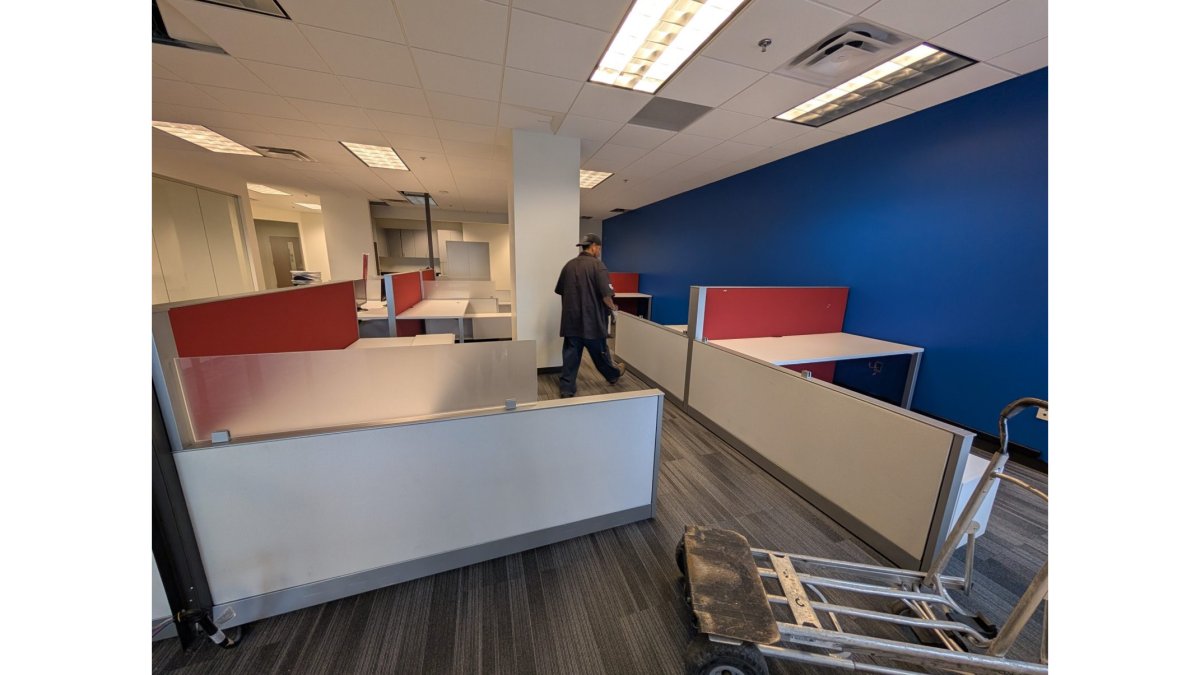
Bulky office furniture is hard to move and costly to ignore. Desks, filing cabinets, and conference tables take up space fast, and most small businesses end up paying for disposal they did not plan for. Before you choose a method, sort your items into three groups: good condition, worn but usable, and broken or unusable. Count the pieces in each group and note their size and weight.
This simple step decides which of the seven methods below will work for you. Good-condition pieces can usually be sold or donated. Broken pieces usually need recycling or a removal service. Sorting also tells you how much space and time the job will take.
- Good condition: Sell, donate, or give away
- Worn but usable: Sell cheap, donate, or bundle together
- Broken or unusable: Recycle, or send to a removal service
- Mixed piles: Split them up before you call anyone
Watch out: Do not assume broken furniture is free to haul. Many providers charge by volume, so sorting first helps you avoid surprise add-on fees.
Sell Used Office Furniture to Resellers and Online Buyers
Selling is often the fastest way to turn old furniture into cash, but the price you get depends heavily on how you sell and who you sell to. Small businesses typically choose between three channels: office furniture resellers, online marketplaces, and direct sale to another business.
Office furniture resellers. Resellers buy used desks, chairs, cabinets, and systems furniture in bulk, usually at a fraction of original retail, commonly a small percentage of what the piece cost new, with the exact share driven by brand, condition, and whether the model is still in demand.
Online marketplaces. Listing single pieces on local marketplaces can bring a better price per item, but you absorb the time cost: photographing, answering messages, scheduling no-shows, and arranging loading.
Direct sale to another business. A nearby business that is expanding or furnishing a second location may buy a matched set outright. This is the least common channel but often the best price for coordinated furniture, because the buyer values the matching set as a unit rather than as individual pieces.
How to get a better offer, whichever channel you use:
- Bundle matching pieces. A desk, credenza, and hutch sold together usually fetch more than the same items sold separately, because the buyer avoids hunting for matches.
- Clean and photograph before listing. Wipe surfaces, clear out drawers, and shoot in daylight. Listings with clear photos and accurate dimensions move faster and draw fewer lowball offers.
- Document condition honestly. Note scratches, missing keys, and worn casters up front. Buyers who arrive to find undisclosed damage often walk, and you lose the pickup slot.
- Time the sale to demand. Demand for used office furniture tends to rise when local businesses are expanding or relocating. If you can wait a few weeks, you may get a better offer than a same-week clearance.
Watch out: Do not let a buyer take furniture before payment clears. For resellers, confirm whether payment is on pickup or on a later invoice, and for marketplace sales, use a payment method with buyer and seller protection rather than cash-only arrangements that leave no record.
Keep a simple record of every sale, item, buyer, date, and amount, because the proceeds may affect how your tax preparer treats the transaction, and the record is easier to build as you go than to reconstruct later.
Here is how the three selling channels compare on the main trade-offs.
| Channel | Best for | Key difference |
|---|---|---|
| Office furniture resellers | Bulk clear-outs | Handle pickup and labor; offers a small share of original cost |
| Online marketplaces | A handful of high-value pieces | Better price per item, but you handle listings and scheduling |
| Direct sale to another business | Matched sets | Buyer values the set as a unit, often the best price |
Office Furniture Donation to Charities and Schools
Donating is a good option when your furniture is still usable and you want it to help someone. Local charities, schools, churches, and community groups often accept office chairs, desks, and shelving. Call ahead, because many organizations only take certain items.
Keep a simple record of what you donate. Ask for a receipt that lists the items and their approximate value. This record can support a tax deduction if you itemize, so talk with your tax preparer about the rules that apply to your business (Topic no. 506, Charitable contributions).
Watch out: Some organizations will not accept furniture with stains, damage, or missing parts. Confirm their rules before you schedule a drop-off.
Office Furniture Recycling for Metal, Plastic and Mixed Materials
When furniture is too damaged to reuse, recycling keeps it out of the landfill, but office furniture is rarely a single material, and that is what makes recycling it harder than recycling cardboard or scrap metal. A typical task chair combines steel, plastic, foam, upholstery, and sometimes electronics; a filing cabinet is mostly steel but may have plastic glides and a lock assembly.
Sort by material before you call anyone. Break the load into four streams:
- Ferrous and non-ferrous metal. Steel desk frames, filing cabinets, shelving, and aluminum chair bases are the highest-value stream and are accepted by most scrap yards. Remove plastic glides, casters, and cushions first, because mixed loads often get downgraded or rejected.
- Plastic. Chair shells, backs, and arm pads are usually a specific resin, and many municipal recycling programs will not take them in curbside bins. Look for a dedicated plastics recycler or a furniture recycler that accepts dismantled components.
- Wood. Clean, untreated wood, solid desk tops, shelving, is easier to recycle or chip than engineered wood with laminate or adhesive, which many facilities will not accept.
- Upholstery and foam. These are the hardest stream. Most foam and fabric ends up in landfill or at a specialty facility, so plan for that cost rather than assuming the whole load is recyclable.
Find a facility that takes what you have. Start with your municipal solid waste or recycling office, which usually publishes a list of accepted materials and drop-off locations. Then call scrap yards and commercial recycling centers directly and ask three questions: what materials they accept, whether they take dismantled furniture components, and whether there is a fee or a rebate.
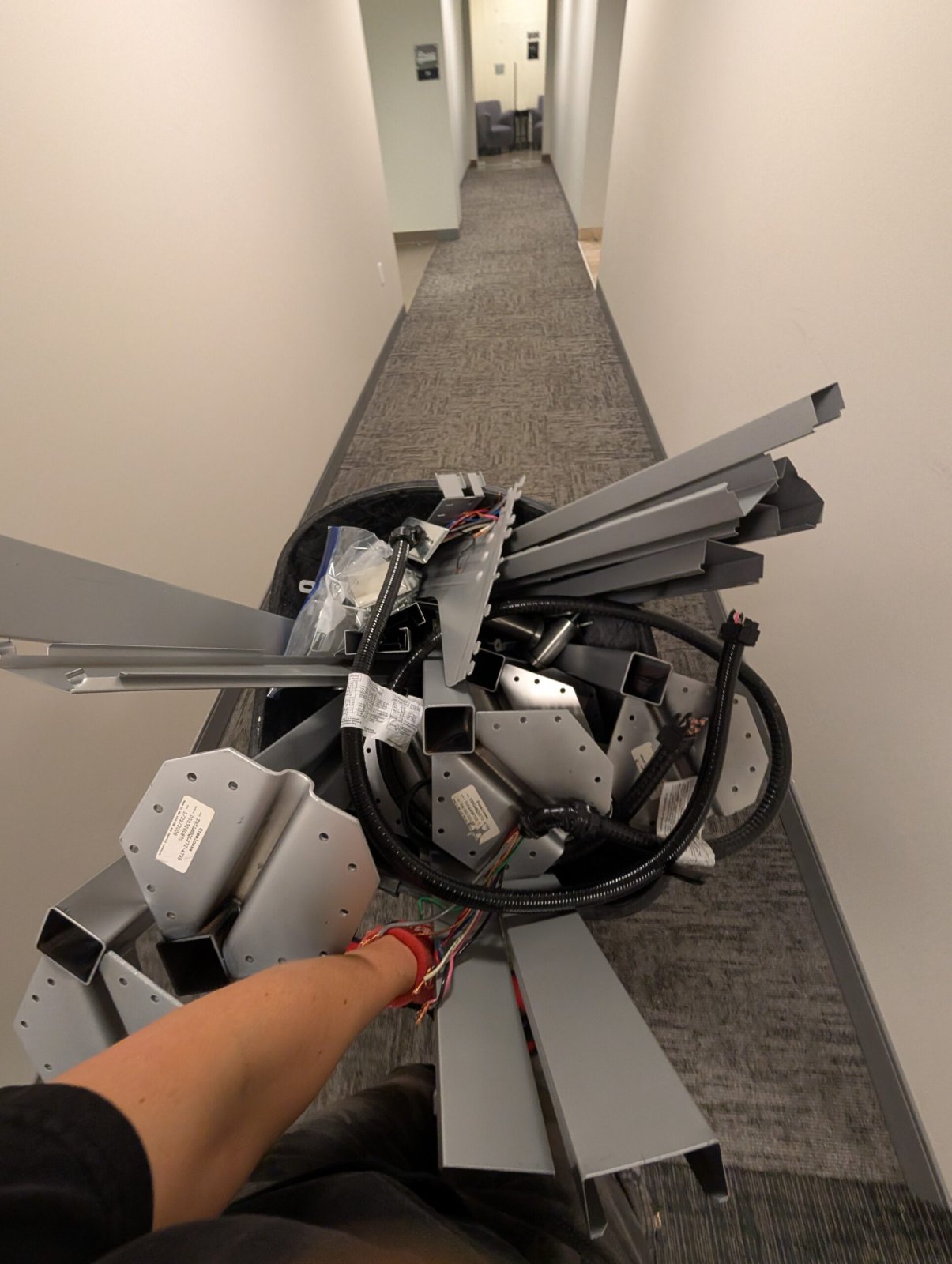
Dismantle before you haul. Most facilities will not separate furniture for you. Removing drawers, casters, cushions, and hardware at your office reduces the volume you pay to transport and increases the share of the load that gets recycled rather than landfilled. Set aside a staging area, keep tools on hand, and bag small hardware so it does not end up as floor sweepings.
Plan for the mixed-material reality. A common pattern is that metal recycles easily and cheaply, while foam, upholstery, and laminated wood carry a disposal cost. Budget for the non-recyclable share rather than expecting a net-zero job, and ask the facility for a weight ticket or receipt so you can document how much was diverted from landfill, useful for sustainability reporting and for your own records.
Watch out: Do not assume a municipal recycling drop-off accepts office furniture. Many curbside and drop-off programs exclude bulky items and specific resins, and arriving with a mixed load can result in a rejection and a return trip.
Commercial Furniture Removal Through Junk Removal Services
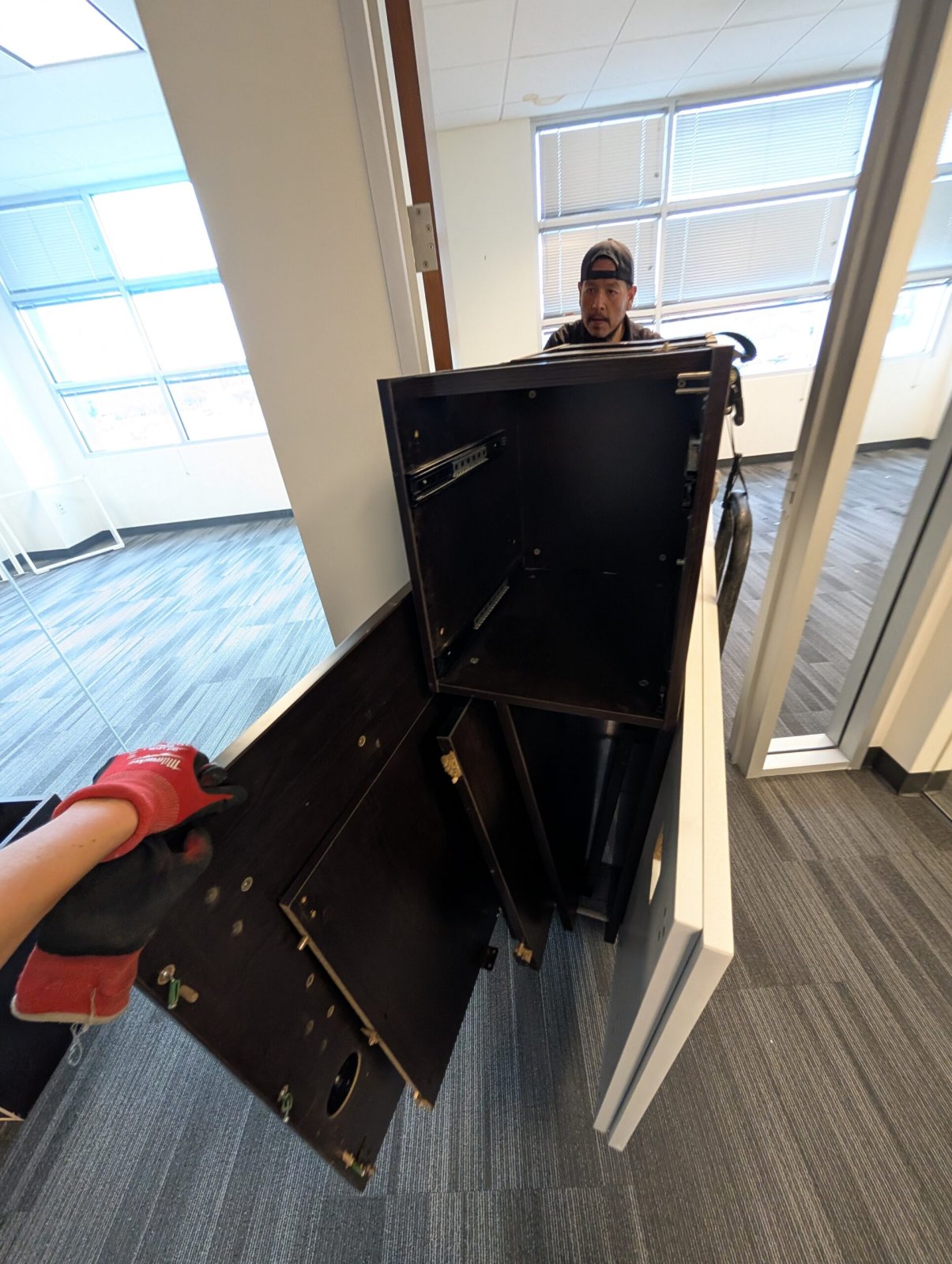
A junk removal service handles the entire job for you. Crew members load the furniture, haul it away, and sort it for resale, donation, recycling, or disposal. This is often the best choice when you have a large volume, a tight deadline, or no staff to move heavy pieces.
Pricing depends on quantity, dates, and delivery, so request a quote from the provider rather than relying on general figures. Ask for a written quote before the work starts. Ask whether the price includes stairs, loading, and disposal fees. Arizona Junk Monkey Removal Services offers removal for commercial clients, and you can request a no-obligation estimate for your items.
- Get a written, all-in quote before booking
- Confirm the crew will handle loading and carrying
- Ask how much of the load is recycled or donated
Using Office Decommissioning and Relocation Services
If you are closing an office or moving to a new location, decommissioning services can manage the whole clean-out. These companies take apart systems, pack what you keep, and remove what you do not need. They often work alongside movers and furniture resellers.
This option works well for large jobs with many departments and deadlines. It costs more than a single pickup, but it saves time for managers who have other work to do. Ask the service how it handles items it cannot resell, so you know what happens to your furniture at the end.
Handling Electronics, Data and Tax Records Before Pickup
Before any furniture leaves your office, check every drawer and cabinet. Old computers, phones, and hard drives can hold customer data. Remove these items and send them to a certified electronics recycler or a data-destruction service. Do not let them leave in a box of furniture.
Also keep your tax and donation records in a safe place. Make copies of receipts for donated items and sale records for sold pieces. Store them with your business records for as long as your tax preparer advises.
- Remove and wipe or destroy all drives and devices
- Keep copies of donation receipts and sale records
- Shred old files that contain client or employee information
Watch out: Empty every drawer and cabinet before anyone moves it.
Booking Your Bulky Office Furniture Pickup in Arizona
If you are in the Northwest Valley and want your office furniture picked up, the simplest first step is to request an estimate. Arizona Junk Monkey Removal Services offers licensed and insured removal for commercial clients, along with eco-friendly disposal and donation practices. Share a list or photos of your items to request a no-obligation estimate before you commit.
When you book, tell the provider the number of items, the floor level, and whether there are stairs or elevator access. These details help you get an accurate quote. Call or text today to schedule your pickup.
Frequently Asked Questions
What do I do with old office furniture?
Start by sorting pieces into three groups: items in good condition that can be sold or donated, items that are damaged but have usable parts or materials that can be recycled, and items that are beyond repair. Good-condition desks, chairs and filing cabinets usually have the most options, since resellers and charities will take them. Broken pieces are better handled through a recycling facility or a junk removal service. Taking this sorting step first keeps costs down, because you pay only for what truly needs disposal.
Can I throw an office chair in the dumpster?
You can, but it is often the most expensive option for the chair itself. Office chairs contain metal, plastic, foam and fabric, and many of those parts can be recycled. Before tossing a chair, check whether a local charity, school or reseller will take it. If the chair is broken, a junk removal service can haul it away for disposal.
How much does office furniture removal cost?
Pricing depends on the number of items, how heavy they are, how many floors they must be carried down, access conditions, the disposal method and your timeline. We do not publish fixed rates for every job. Arizona Junk Monkey Removal Services provides no-obligation estimates, so you can see the full cost before work begins. Visit azjunkmonkey.com or call or text us for a current quote tailored to your office.
Can small businesses donate used office furniture?
Yes. Many charities, schools, nonprofits and community organizations accept good-condition desks, chairs and shelving. Ask for a written donation receipt listing the items and their approximate value, since this documentation supports your tax records. Donation is most practical when the furniture is clean, complete and not heavily damaged, and when the receiving organization can arrange or accept pickup on a realistic schedule.