

Table of Contents
- Why You Keep Putting Off the Garage Cleanout
- Step 1: Set Up Your Sort Zones Before You Touch Anything
- Step 2: Use the Garage Cleanout Checklist to Sort Fast
- Step 3: How to Dispose of Old Appliances the Right Way
- Step 4: Build Storage That Maximizes Vertical Space
- Step 5: When to Call Garage Junk Removal Services Instead
- Step 6: Label, Inventory, and Keep It That Way
- Conclusion
- Frequently Asked Questions
Last Updated: September 16, 2026
Why You Keep Putting Off the Garage Cleanout
Most garages don’t fail because people are lazy. They fail because the job feels endless, so it never starts. If you want to know how to declutter garage fast, the first honest step is admitting that the delay is emotional, not logistical. At AZ Junk Monkey Removal Services, we understand that the stuff piled up in small, reasonable decisions over years.
The Real Reasons Garages Become Dumping Grounds
A garage is the only room in the house with no assigned purpose, so it absorbs everything nobody wants to decide on. Broken appliances wait for a repair that never comes. Boxes from a move sit unopened because opening them means confronting what’s inside. The U.S. Environmental Protection Agency’s guidance on household hazardous waste notes that many of these items, from paint to old electronics, cannot simply go in the trash, which makes the pile feel even harder to touch.
There’s a second barrier most guides ignore: decision fatigue. Every object asks a question, and a garage holds hundreds of questions. The fix is to stop asking them one at a time.
Step 1: Set Up Your Sort Zones Before You Touch Anything
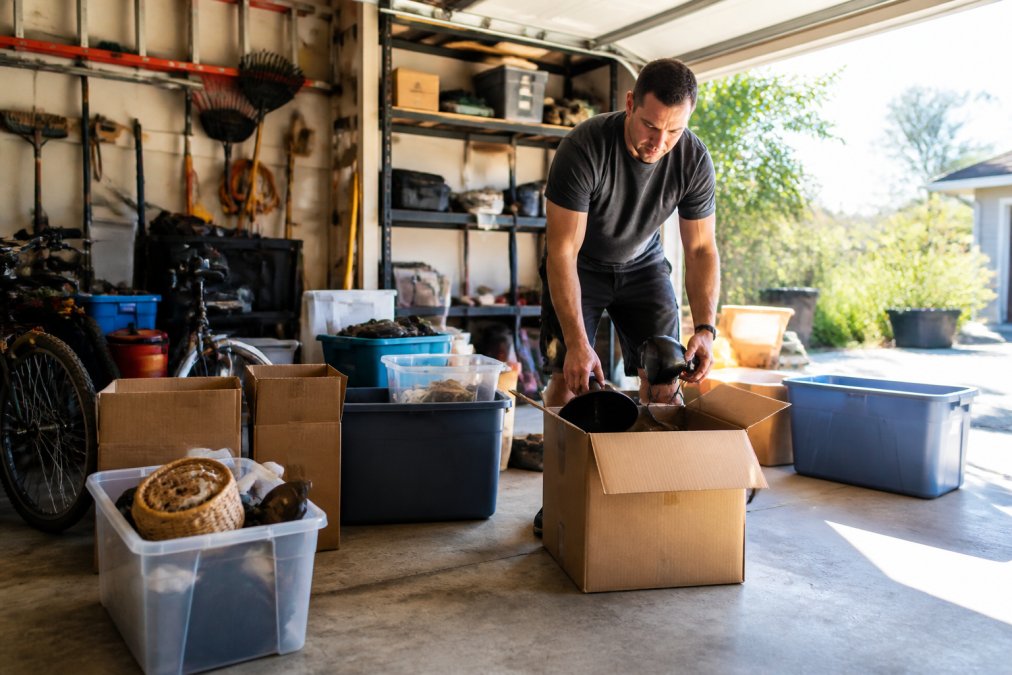
Sorting fails when you carry one item at a time to a distant pile. Set up four zones in the driveway or just inside the garage door, then work in one direction only.
- Keep: used at least twice a year
- Donate: usable but unwanted
- Toss: broken, unsafe, or worthless
- Recycle or special disposal: appliances, electronics, chemicals
Give yourself one afternoon per zone, not one per item. This single change is what makes a fast garage cleanout possible.
Step 2: Use the Garage Cleanout Checklist to Sort Fast
Work in this order so you never handle the same item twice:
- Clear the floor first. Floor space is the goal.
- Sort tools and hardware into one area.
- Move seasonal items to the walls.
- Handle appliances and electronics last.
- Sweep and inspect before anything goes back in.
Keep, Donate, Toss, or Recycle
Apply the two-year rule without negotiating: if you haven’t used it in two years, it leaves. A common mistake is keeping a broken item “for parts.” In practice, those parts never get used, and the item just changes location.
Step 3: How to Dispose of Old Appliances the Right Way
Old appliances are the hardest part of any garage cleanout, and the reason is simple: they contain materials that regular trash service won’t take. A refrigerator, freezer, air conditioner, or dehumidifier holds refrigerant, and federal rules require that refrigerant be recovered before the unit is scrapped (the EPA). Curbside pickup usually fails because most haulers won’t accept appliances at all, and the ones that do often require a scheduled bulk pickup with specific prep.
Your realistic options:
| Item | Best Disposal Route | Why |
|---|---|---|
| Refrigerator or freezer | Appliance recycler or junk removal | Refrigerant must be recovered |
| Washer or dryer | Scrap metal recycler | Mostly steel, often accepted free |
| Old electronics | Certified e-waste drop-off | Contains metals and components |
| Paint, solvents, pesticides | Household hazardous waste event | Banned from landfills |
Never cut refrigerant lines or drain an appliance yourself to make it lighter. Releasing refrigerant is illegal under federal law, and the fine lands on you, not the hauler.
Step 4: Build Storage That Maximizes Vertical Space
Vertical space is the most underused asset in every garage. The floor is for vehicles and walking; everything else belongs on walls and overhead.
- Install wall-mounted storage and freestanding shelving rated for the load.
- Add overhead shelving for seasonal items and bulk storage you touch twice a year.
- Mount pegboards above the workbench for tool organization.
- Use clear plastic bins so contents are visible without opening them.
- Keep heavy items between knee and shoulder height.
Budget-friendly DIY storage works fine here. A sheet of plywood and heavy-duty brackets costs little and holds more than most store-bought racks.
Step 5: When to Call Garage Junk Removal Services Instead
Call a professional when the volume is too large for your vehicle, when appliances or hazardous items are involved, or when the job needs to be done in one visit. Garage junk removal services make sense for landlords clearing a unit after an eviction, elderly residents who can’t lift furniture, and anyone facing a deadline.
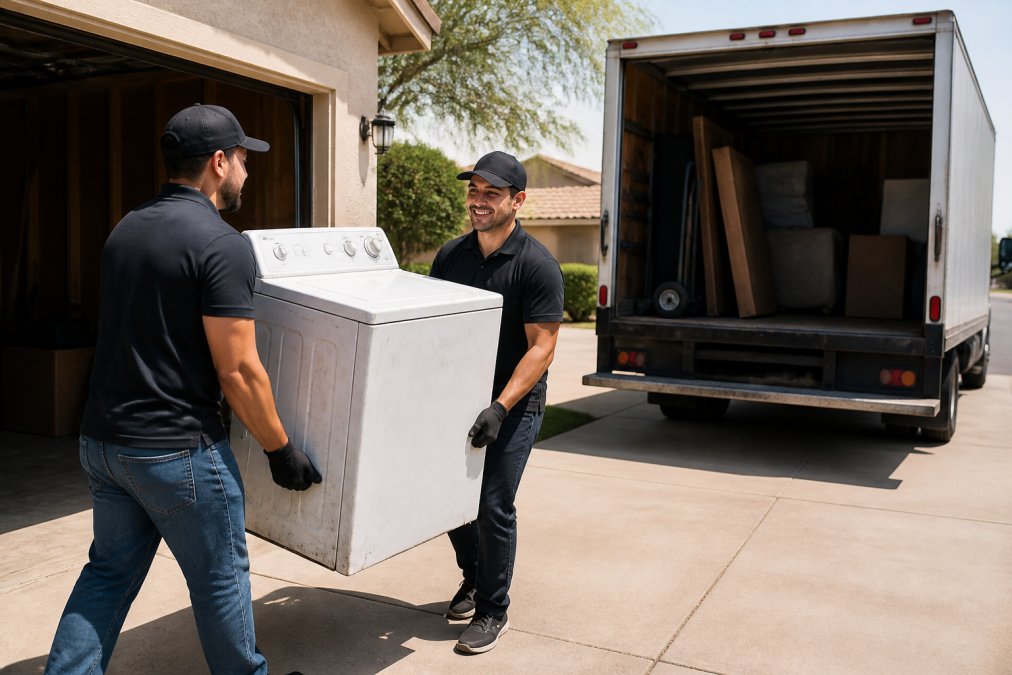
This is where AZ Junk Monkey Removal Services fits. As a local, family-owned, licensed and insured business, we handle appliance removal, property cleanouts, and bulk hauling, with eco-friendly disposal and donation practices so usable items don’t automatically go to the landfill. Estimates are free and carry no obligation, and you can pay by cash, check, card, or Zelle.
Step 6: Label, Inventory, and Keep It That Way
An organized garage stays organized only if you can find things without digging.
- Label every bin on the front and the lid.
- Keep a simple written or phone-based inventory of what’s in each bin.
- Store by frequency of use: daily items at eye level, seasonal items overhead.
- Schedule one 20-minute reset each season, tied to spring cleaning and fall prep.
Photograph each labeled bin and keep the photos in a phone album. When you need the extension cords in March, you’ll know exactly which bin without pulling down six boxes.
Conclusion
The hardest part of a garage cleanout isn’t the lifting. It’s the deciding, and that’s exactly where most people stall. If the pile includes old appliances, furniture, or years of accumulated bulk, you don’t have to solve it alone. AZ Junk Monkey Removal Services offers full-service junk removal with licensed and insured crews, eco-friendly disposal and donation practices, and no-obligation estimates. Call or text today and reclaim your garage in one visit.
Frequently Asked Questions
What is the 5-5-5 rule for decluttering?
The 5-5-5 rule splits your garage into three quick passes: find 5 items to toss, 5 to donate, and 5 to relocate to another room or return to their owner. Each pass should take about five minutes. The short time limit stops you from overthinking individual items, which is the main reason garage cleanouts stall. Repeat the cycle until your toss, donate, and relocate piles stop growing. It works well as a warm-up before you tackle bigger categories like shelving, tools, or seasonal items.
How do I get rid of large amounts of garage junk quickly?
Rent a roll-off dumpster or book a full-service garage junk removal crew. A dumpster works when you have a weekend and helpers to load it yourself, but you handle the heavy lifting, the sorting, and any disposal rules. A full-service crew loads everything, hauls it in one trip, and separates donations and recyclables from landfill waste. For a garage packed with appliances, furniture, and construction debris, the full-service route usually finishes in a single visit.
What items should you never store in a garage?
Skip propane tanks, gasoline cans, paint thinners, and other flammable liquids unless they sit in a sealed, ventilated cabinet. Paper photos, electronics, and important documents warp or corrode from humidity swings. Cardboard boxes attract pests and hold moisture, so move keepsakes indoors. Pet food, birdseed, and open bags of fertilizer draw rodents. If you find any of these during your cleanout, treat them as a separate pile and check your local household hazardous waste rules before disposal.
How much does a professional garage cleanout cost?
Pricing depends on volume, item type, access, and how much of the load can be donated or recycled rather than landfilled. Appliances with refrigerant, tires, and construction debris often carry separate handling requirements, which affects the total. Because every garage is different, the only accurate number comes from an on-site or photo-based estimate. Ask for a written, no-obligation quote before anyone starts loading, and confirm whether the crew is licensed and insured so you are not left holding liability for damage.