

Table of Contents
- Why You Can’t Just Throw Away Appliances With Freon
- EPA Refrigerant Disposal Regulations and Legal Requirements
- Identifying Which Appliances Contain Refrigerants
- Step-by-Step Process for Disposing of Freon Appliances
- Understanding the Cost of Freon Removal From Refrigerators
- Appliance Recycling Pickup Services and Drop-Off Options
- Common Mistakes to Avoid When Disposing of Freon Appliances
- Frequently Asked Questions
Last Updated: September 23, 2026
Why You Can’t Just Throw Away Appliances With Freon
Learning how to dispose of appliances with freon is essential because refrigerators, air conditioners, and freezers contain refrigerants such as Freon, which damage the ozone layer and contribute to climate change. The EPA strictly regulates their disposal. Improper handling can result in fines and refusal by waste management facilities. The safe path forward is hiring certified professionals to handle refrigerant removal.
Venting refrigerant into the air is illegal under federal law. Violations can result in fines up to $37,500 per violation. Always hire a certified technician for refrigerant removal.
EPA Refrigerant Disposal Regulations and Legal Requirements
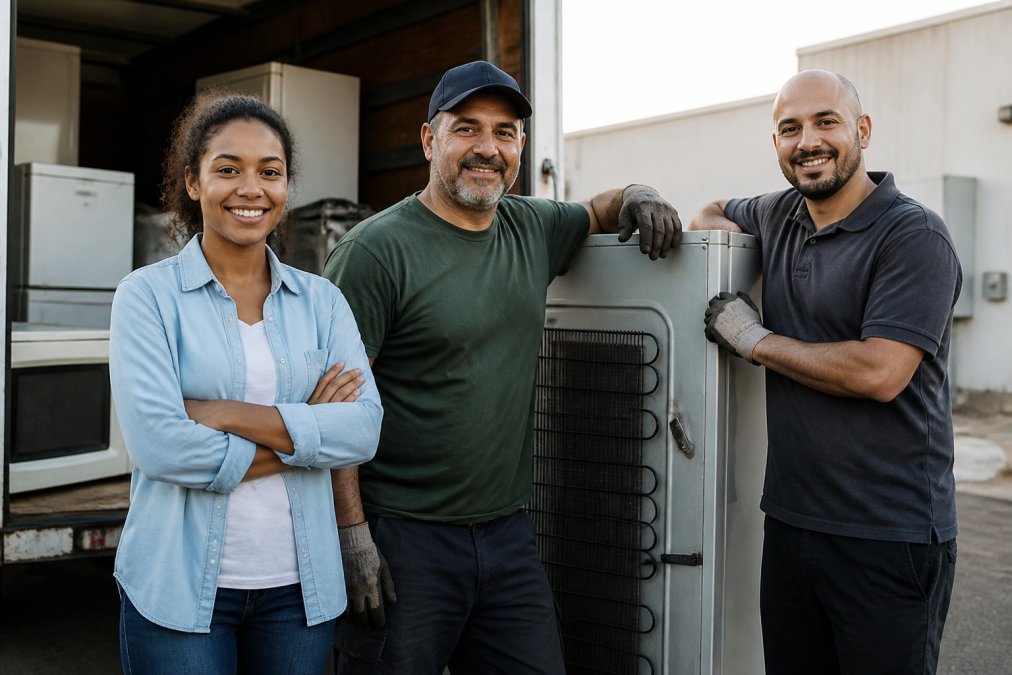
Under Section 608 of the Clean Air Act, only certified technicians can legally handle refrigerant recovery. As a homeowner, you must hire a certified professional, you cannot remove refrigerant yourself or hire an uncertified person to do so.
Here’s what the law requires:
- All refrigerant must be recovered before an appliance is scrapped or recycled
- Recovery must be performed by a Section 608-certified technician
- Recovered refrigerant must be properly reclaimed or destroyed
- Records of recovery must be documented and retained
- Appliances cannot be vented or left in the field with refrigerant still inside
Ask your technician to show their Section 608 certification card before work begins. A legitimate professional will have it readily available. This protects both you and the environment.
Identifying Which Appliances Contain Refrigerants
Appliances that use cooling technology, such as refrigerators, freezers, air conditioners, heat pumps, and dehumidifiers, contain refrigerant and require professional removal.
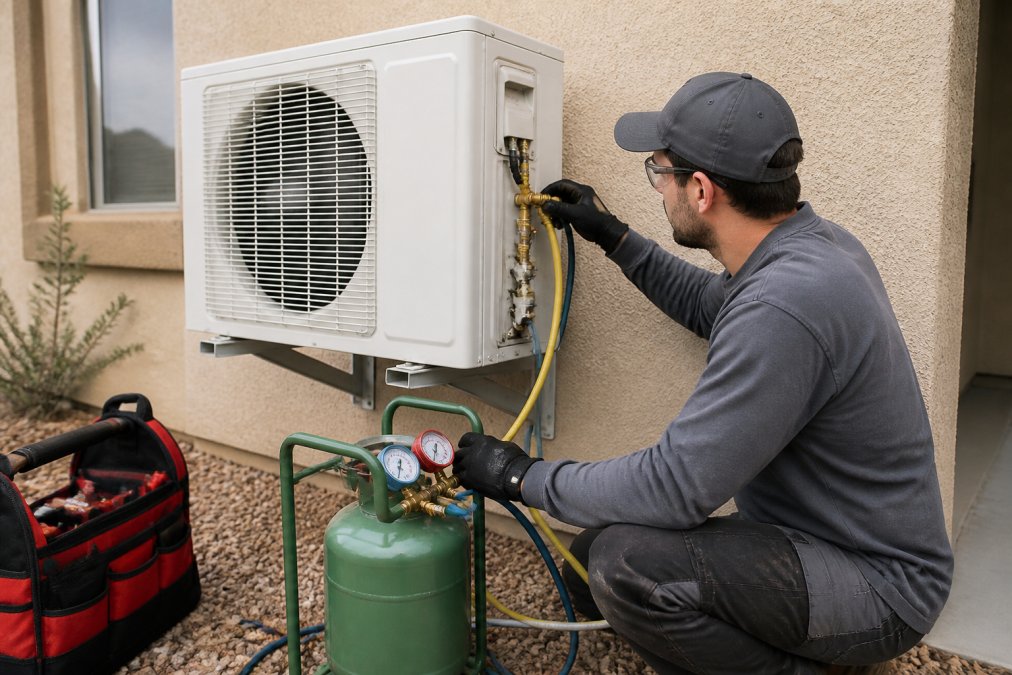
Appliances that typically contain refrigerant:
- Refrigerators and freezers
- Window air conditioners
- Central air conditioning systems
- Heat pumps
- Dehumidifiers
- Portable air conditioners
- Some older water coolers
Appliances that do NOT contain refrigerant:
- Microwaves
- Ovens and stoves
- Dishwashers
- Washers and dryers
- Televisions
- Older box fans
Step-by-Step Process for Disposing of Freon Appliances
Proper disposal involves several steps that ensure EPA compliance and environmental protection, typically taking one to two weeks.
Step 1: Prepare Your Appliance for Pickup
Unplug the appliance 24 hours before pickup to allow pressure to equalize. Clear the surrounding area of obstacles, remove contents, and document the appliance’s condition with photos.
Step 2: Find a Certified Technician or Disposal Facility
Finding the right service is critical. You need a certified technician or disposal facility licensed to handle refrigerant removal. Start by calling local HVAC contractors or appliance recycling centers.
Ask these questions before hiring:
- Are you Section 608-certified?
- Do you have liability insurance?
- What is your process for refrigerant recovery?
- Will you provide documentation of the recovery?
- Do you offer pickup service?
Step 3: Schedule Refrigerant Evacuation or Professional Removal
Schedule the appointment within one to two weeks. The technician will inspect the appliance, extract refrigerant into recovery cylinders, test for complete evacuation, and provide documentation. The process typically takes one to three hours.
Keep your recovery documentation. You may need it if you sell the appliance or if questions arise about disposal later.
Understanding the Cost of Freon Removal From Refrigerators
Disposal costs vary significantly depending on the service model you choose.
The Three Cost Models
Paid Disposal: Most homeowners pay for certified technician or recycling facility services. Refrigerators and freezers may cost more than air conditioners due to larger refrigerant quantities. Fees cover specialized equipment, EPA documentation, and transport to reclamation facilities.
Factors That Affect Your Cost
- Appliance type: Refrigerators and freezers cost more to recover than air conditioners because they contain more refrigerant and require longer evacuation times.
- Refrigerant type: Older appliances with R-12 (CFC) refrigerant may cost more to recover safely than newer units with R-410A or R-134a.
- Appliance condition: A leaking appliance may require additional time and care, increasing the fee. A unit that’s already non-functional may be cheaper to process than one still in working condition.
- Accessibility: If the appliance is in a basement, attic, or difficult-to-reach location, pickup fees may increase.
- Your location: Rural areas typically charge higher fees than urban centers because technicians travel farther. States with stricter environmental regulations may also charge more.
- Pickup vs. drop-off: Pickup services cost more than drop-off because the service includes labor and transportation. Drop-off facilities are cheaper if you can transport the appliance yourself.
How to Get Accurate Pricing
Before committing to a service, contact at least two local options:
- Local HVAC contractors – Ask if they offer appliance removal and refrigerant recovery. Many do as a side service.
- Appliance recycling centers – Search “appliance recycling near me” to find facilities that accept refrigerated appliances.
- Your utility company – Call and ask if they participate in the RAD program or offer discounts through partner services.
- Scrap metal recyclers – If your appliance is large and relatively new, a scrap yard may quote you a price.
When you call, provide:
- Appliance type (refrigerator, freezer, air conditioner, etc.)
- Age and condition
- Whether you need pickup or can drop off
- Your zip code (for location-based pricing)
If a service quotes an unusually low price (under $30) or refuses to provide a written estimate, verify they’re Section 608-certified. Suspiciously cheap services may cut corners on refrigerant recovery or documentation.
Real-World Cost Example
A 15-year-old refrigerator in working condition, located in a suburban area, picked up by a certified technician will incur a cost. The same refrigerator dropped off at a local recycling facility will incur a cost. The same refrigerator removed through a utility RAD program may be free or incur a nominal cost.
Appliance Recycling Pickup Services and Drop-Off Options
Two main service models exist: pickup and drop-off, each with different cost, convenience, and timeline trade-offs.
Pickup Services
Pickup Services: Technicians come to your home and handle the entire process. Advantages: no transportation needed, works for large appliances, minimal effort, faster in urban areas. Disadvantages: higher cost, requires home access, less timeline control. Best for large appliances or limited transportation.
Drop-Off Facilities
Drop-Off Facilities: You transport the appliance to a recycling center. Advantages: lower cost, you control timing, faster processing. Disadvantages: you arrange transportation, difficult for large appliances, limited facility hours. Best for small appliances with transportation access.
Community Collection Events
Many municipalities and waste management districts host seasonal or annual appliance collection events. Residents can drop off appliances for free or at a nominal fee. These events are typically held in spring or fall and advertised through local government websites or utility company newsletters.
Advantages:
- Free or very low cost
- No appointment needed (often first-come, first-served)
- Community-focused and environmentally responsible
- May include other items (electronics, batteries, etc.)
Disadvantages:
- Limited availability (seasonal or annual)
- May have long wait times on event day
- Specific drop-off locations and hours
- No guarantee your appliance will be accepted if event capacity is reached
The EPA’s Responsible Appliance Disposal (RAD) Program: Your Best Resource
How to Access RAD:
- Call your utility company (electric or gas) and ask if they participate in the Responsible Appliance Disposal program. Ask for the phone number or website of their RAD partner.
- Visit the EPA’s RAD program locator to search for participating utilities and retailers in your area by zip code.
- Ask when purchasing a new appliance – Retailers like Best Buy, Home Depot, Lowe’s, and local appliance stores often include free haul-away through RAD partnerships.
If your utility company participates in RAD, you should use it. It’s free or nearly free, environmentally certified, and removes the burden of finding a certified technician. Check your utility’s website or call their customer service line to learn about your options.
RAD ensures safe refrigerant recovery, prevents ozone depletion and climate damage, recovers valuable materials, and guarantees EPA compliance documentation.
Comparing Your Options: A Quick Reference
| Option | Cost | Convenience | Timeline | Best For |
|---|---|---|---|---|
| Private pickup service | $75-$200 | High (they come to you) | 1-2 weeks | Large appliances, no transportation |
| Drop-off facility | $25-$80 | Medium (you transport) | Same-day to 1 week | Small appliances, flexible schedule |
| Community event | $0-$25 | Low (limited availability) | Seasonal | Budget-conscious, patient |
| RAD program (utility) | $0-$25 | High (free pickup) | 1-3 weeks | Any appliance, best environmental option |
| RAD program (retailer) | Free | High (included with purchase) | Varies | Buying a new appliance |
Common Mistakes to Avoid When Disposing of Freon Appliances
When learning how to dispose of appliances with freon, avoid these mistakes: hiring uncertified technicians, attempting DIY removal, leaving appliances at the curb, donating without disclosing refrigerant, delaying removal (leaks worsen), and failing to obtain recovery documentation.
| Step | Action | Timeline |
|---|---|---|
| 1 | Prepare appliance for pickup | 1 day |
| 2 | Find certified technician or facility | 3-5 days |
| 3 | Schedule refrigerant evacuation | 1-2 weeks |
| 4 | Complete removal and recovery | 1-3 hours |
| 5 | Receive documentation | Same day |
Frequently Asked Questions
Can I throw an appliance with freon in the regular trash?
No. Throwing appliances with freon in regular trash is illegal and harmful. Freon (chlorofluorocarbons and hydrochlorofluorocarbons) damages the ozone layer and contributes to greenhouse gas emissions. The EPA enforces strict penalties for illegal disposal. You must use a certified disposal facility or hire a licensed technician to recover the refrigerant before the appliance can be recycled or scrapped.
Do I need to have freon removed before scheduling junk removal?
It depends on the service. Professional appliance removal companies like Arizona Junk Monkey handle freon-containing appliances. However, if you’re using a general junk removal service, confirm they work with certified refrigerant recovery specialists. Never attempt to remove freon yourself; it requires Section 608 certification and specialized equipment.
What types of appliances contain freon or other refrigerants?
Common household appliances containing refrigerants include refrigerators, freezers, air conditioners, dehumidifiers, and some older window units. Commercial appliances like ice makers and beverage coolers also contain refrigerants. If an appliance uses cooling technology, it likely contains refrigerant. Check the manufacturer’s label or manual if you’re unsure about a specific appliance.
How do I find a certified technician to remove refrigerant?
Look for technicians with EPA Section 608 certification, which qualifies them to handle refrigerant recovery and evacuation. Search online for ‘certified refrigerant recovery technician’ in your area, contact local HVAC companies, or ask your waste management provider for referrals. Professional appliance removal services often have established relationships with certified technicians and handle the coordination for you.