

Table of Contents
- Why Proper Appliance Disposal Matters
- Donation Options for Working Appliances
- Retailer Take-Back Programs and Trade-In Options
- How to Dispose of Refrigerator with Freon and Other Hazardous Components
- Bulky Item Pickup and Curbside Collection Services
- Appliance Removal Cost and Hiring Professional Junk Removal Services
- Self-Hauling to Landfills and Transfer Stations
- Preparing Your Appliances for Collection or Removal
- Frequently Asked Questions
Last Updated: September 21, 2026
Why Proper Appliance Disposal Matters
Proper appliance disposal protects your home, wallet, and environment. Improper disposal releases hazardous materials like refrigerant, oils, and metals into ecosystems and can result in fines or liability (the EPA).
This guide covers seven proven methods to dispose of old appliances responsibly, whether your appliance works or is broken.
Donation Options for Working Appliances
If your appliance still runs, donation is often the best choice. Organizations like Habitat for Humanity ReStore, Goodwill, Salvation Army, and local nonprofits accept working washers, dryers, refrigerators, and more.
Where to donate working appliances:
- Habitat for Humanity ReStore locations
- Goodwill and Salvation Army (some locations)
- Local nonprofits and community centers
- Churches and religious organizations
- Shelters and transitional housing programs
Call ahead to confirm condition requirements and ask about free pickup. You’ll receive a tax deduction while someone in need gets an affordable appliance.
Many charities offer free pickup for large appliances. Ask about their pickup service when you call, it saves you a trip and the hassle of moving a heavy fridge or stove yourself.
Retailer Take-Back Programs and Trade-In Options
When buying a new appliance, many retailers offer take-back programs that remove and dispose of your old one at no extra charge.
How retailer take-back programs work:
- Schedule delivery and installation of your new appliance
- The retailer removes your old one at the same time
- Disposal is included in the service (sometimes for a small fee)
- Your old appliance gets recycled or refurbished
Some retailers also offer trade-in discounts on your new purchase. Everything happens in one trip, making this the easiest option when buying a replacement.
Retailer take-back is the easiest option if you’re buying a replacement appliance. The retailer handles pickup and disposal, so you don’t have to.
How to Dispose of Refrigerator with Freon and Other Hazardous Components
Refrigerators and air conditioning units contain refrigerant (freon), which damages the ozone layer. Federal law requires certified technicians to recover refrigerant before disposal.
Hazardous components in common appliances:
- Freon in refrigerators and freezers
- Oils in compressors
- Capacitors containing PCBs (in older models)
- Mercury in some thermostats
- Insulation foam with CFCs
Safe disposal steps for refrigerators with freon:
- Contact a certified appliance recycler or HVAC professional
- They remove and recover the refrigerant safely
- The appliance is then dismantled for recycling
- Metal, plastic, and glass are separated and reused
Never attempt to remove refrigerant yourself, it requires special equipment and certification. Recycling facilities may charge for this service, which is worth the cost to stay compliant with environmental regulations.
Attempting to dispose of a refrigerator by breaking it open or dumping it releases freon into the air. This violates federal law and can result in fines. Always use a certified professional.
Bulky Item Pickup and Curbside Collection Services
Many municipalities offer bulky item pickup or curbside collection for large appliances. Call your waste management provider to schedule a pickup date (usually free or low-cost). Some areas limit items per month or require advance scheduling. This is one of the most affordable options if available in your area.
Appliance Removal Cost and Hiring Professional Junk Removal Services
Professional junk removal services handle loading, transport, and proper disposal, ideal when you need fast, reliable removal.
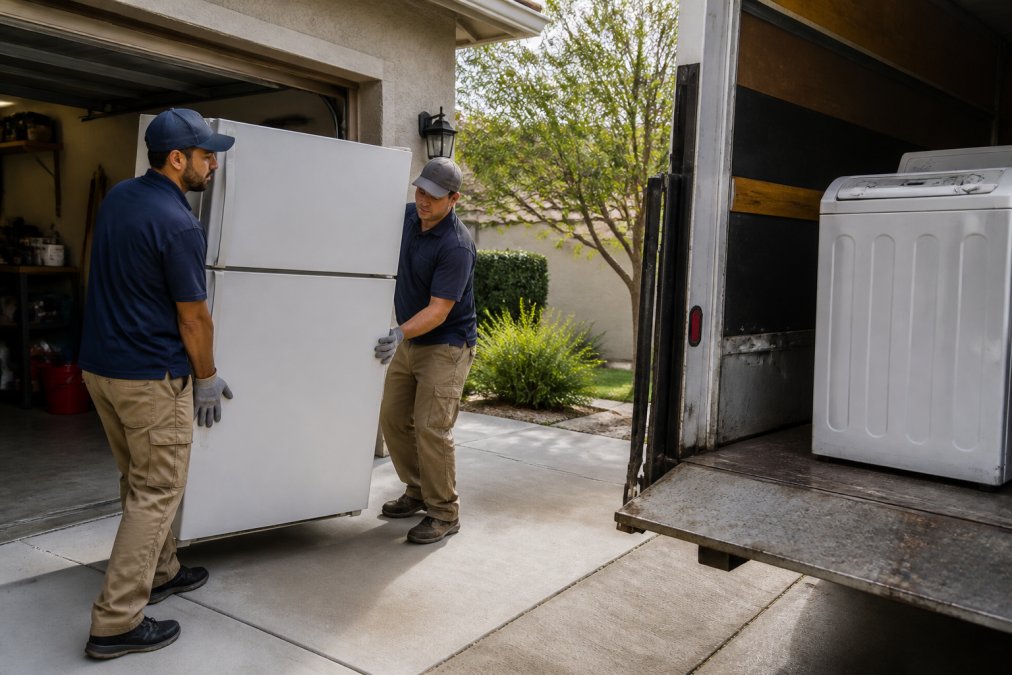
Professional removal cost breakdown:
Pricing for professional removal depends on the type and quantity of appliances, as well as any hazardous component recovery needed. For a no-obligation estimate, call or text us today.
DIY vs. Professional Cost Analysis:
| Method | Cost | Time | Physical Effort | Compliance Risk |
|---|---|---|---|---|
| Self-haul to transfer station | $0-$50 per item | 2-4 hours | Very high | Medium (if facility accepts appliance) |
| Curbside/bulky pickup | Free-$25 per item | Minimal (scheduling only) | None | Low (municipal oversight) |
| Professional removal | $150-$500 per appliance | 30 minutes-1 hour | None | Very low (licensed, insured) |
| Retailer take-back | Free-$50 (with new purchase) | Included with delivery | None | Very low (retailer responsible) |
Professional removal makes sense if you’re over 50, have mobility issues, or lack a truck. For refrigerators with freon, professionals handle certification and recovery, DIY attempts can result in EPA fines. For multiple appliances, professional services can be a convenient and efficient option.
Questions to ask before hiring:
- Is freon recovery included in the quoted price?
- Do they provide same-day or next-day service?
- Are they licensed and insured?
- What happens if they damage your property during removal?
- Do they offer a free estimate?
- Will they recycle or refurbish the appliance, or is it going to a landfill?
Reputable services provide written estimates upfront with no hidden fees. They carry liability insurance and can show proof of EPA certification for hazardous component handling.
Self-Hauling to Landfills and Transfer Stations
If you have a truck or can borrow one, you can haul appliances directly to a landfill or transfer station. This is often the most affordable option if you’re willing to do the work yourself. However, moving heavy appliances safely requires proper equipment and technique to avoid injury.
Steps for self-hauling:
- Contact your local transfer station or landfill
- Ask about appliance acceptance and any fees
- Load the appliance safely onto your vehicle (use dollies and straps)
- Drive to the facility during operating hours
- Unload at the designated area
- Pay any applicable fees
Transfer station fees by appliance type:
Most transfer stations charge per item or by weight.
Essential equipment for safe appliance moving:
- Appliance dolly or hand truck: A standard hand truck won’t work for refrigerators. You need a specialized appliance dolly with straps and a wide base. Cost varies to purchase or rent from hardware stores.
- Moving straps or ratchet straps: Secure the appliance to the dolly and to your truck bed. Cost varies for a set.
- Furniture sliders or moving blankets: Protect floors and the appliance during movement. Cost varies.
- Work gloves: Improve grip and protect your hands. Cost varies.
- Closed-toe shoes with good traction: Essential for stability when moving heavy items.
Step-by-step safe loading technique:
- Prepare the appliance: Empty it completely, disconnect power cords, and secure any loose parts or doors with rope or tape.
- Clear the path: Remove obstacles from the appliance to your truck. Measure doorways and hallways to ensure the appliance will fit.
- Tilt and slide: Tilt the appliance back onto the dolly wheels (most appliances have wheels or can be tilted). Never drag an appliance across floors, this damages both the appliance and your flooring.
- Secure to the dolly: Use moving straps to wrap around the appliance and dolly frame. Tighten straps so the appliance cannot shift.
- Load onto the truck: Use a ramp if available. If loading into a pickup bed, have a helper guide you. Keep the appliance centered and secure it with additional straps to the truck bed.
- Drive carefully: Avoid sudden stops and sharp turns. Appliances can shift during transport.
- Unload at the facility: Use the same technique in reverse. Many transfer stations have staff who can assist with unloading.
Common mistakes that cause injury or damage:
- Attempting to move an appliance without a dolly (risk of back injury and floor damage)
- Overloading your vehicle (reduces braking ability and tire safety)
- Not securing the appliance during transport (it can shift or fall out)
- Dragging instead of rolling (damages flooring and the appliance)
- Moving alone without a helper (increases injury risk and makes loading harder)
- Ignoring weight limits on rental equipment
Refrigerators and freezers: special considerations
When self-hauling makes sense:
Refrigerators and freezers with freon cannot be disposed of at most standard landfills. You must take them to a certified appliance recycler. Check facility requirements before driving there. Improper disposal of refrigerants violates federal law and can result in EPA fines.
Preparing Your Appliances for Collection or Removal
Proper preparation ensures safe removal and smooth disposal. A few simple steps make the process faster and safer for everyone involved.
Preparation checklist:
- Empty the appliance completely (no food, items inside)
- Defrost freezers 24 hours before pickup (water damage prevention)
- Disconnect from power and water lines
- Secure doors with rope or tape (prevents opening during transport)
- Clean the exterior if possible
- Note any damage or special handling needs
- Take photos for your records
- Clear a path from the appliance to your door or driveway
Documentation for donation or recycling:
- Get a receipt from the charity or recycler
- Keep records for tax deduction purposes
- Note the pickup or drop-off date
- Photograph the appliance condition before removal
Frequently Asked Questions
What is the best way to dispose of old appliances?
The best method depends on your appliance’s condition and your situation. Working appliances should go to donation centers or charities first. Broken units can be recycled through municipal appliance recycling programs, retailer take-back services, or professional junk removal. Refrigerators and air conditioners require certified technician removal due to refrigerant regulations. For convenience and proper handling of heavy items, hiring professional junk removal services ensures safe, compliant disposal.
How do I dispose of a refrigerator with freon safely?
Refrigerators and freezers containing freon or other refrigerants must be handled by certified technicians. The EPA requires refrigerant recovery before recycling or disposal to prevent environmental contamination. Never attempt DIY removal of refrigerant. Contact your local waste management authority, appliance retailers offering haul-away, or professional junk removal services to ensure proper evacuation and recycling of refrigerated appliances.
What’s the difference between DIY hauling and hiring professional junk removal services?
DIY hauling to a transfer station saves money but requires you to rent a truck, lift heavy appliances, and make multiple trips. Professional junk removal services handle the entire process, loading, transportation, and proper disposal, saving time and physical strain. Costs vary based on appliance size and quantity. Professional services also ensure hazardous components are handled correctly and items are recycled or donated responsibly, which DIY hauling may not guarantee.
Can I put old appliances in a standard residential trash bin or dumpster?
No. Most municipalities prohibit appliances in regular trash or standard dumpsters due to environmental and safety regulations. Appliances contain hazardous materials like refrigerants, oils, and metals that require specialized recycling. Bulky item pickup services, curbside collection programs, appliance recycling facilities, and professional junk removal are the approved methods. Check your local waste management guidelines for specific rules in your area.