

Quick Summary
You can manage an estate cleanout remotely from out of state by confirming legal authority first, appointing a trusted local contact, and getting written quotes and photo or video updates throughout. Set a timeline and approval process before any work begins so decisions stay documented and the crew never acts without clear sign-off.
- Confirm the executor or administrator’s legal authority with certified letters before anyone removes items.
- Name one local contact to hold keys, photograph each room, and relay decisions.
- Get at least three written, itemized quotes and verify licensing and insurance.
- Secure documents, medications, firearms, and jewelry in a sensitive-items sweep before general sorting.
- Require dated photos or video at the start, midpoint, and completion before final payment.
Table of Contents
- Planning Your Estate Cleanout From a Distance
- Establishing Legal Authority and Probate Safeguards
- Building an Estate Cleanout Timeline That Works Remotely
- Vetting Local Estate Cleanout Services
- Arranging Property Access, Key Handoff, and Photo Assessment
- Creating a Remote Estate Cleanout Communication Plan
- Sorting Belongings, Handling Sensitive Items, and Documenting Decisions
- Your Remote Estate Cleanout Checklist and Next Step
- Frequently Asked Questions
Planning Your Estate Cleanout From a Distance
Managing an estate cleanout remotely from out of state is possible when you plan carefully and stay in regular contact with the people on the ground. A clear plan makes the work far less stressful.
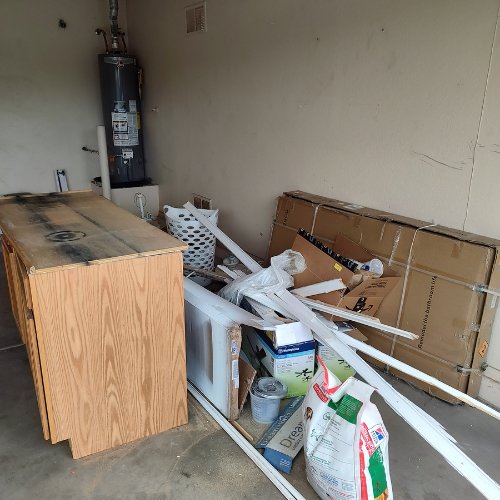
Start by listing what you need to accomplish: which rooms need clearing, what must be kept, what can be donated or sold, and when the property needs to be empty. Write these goals down before you call anyone. This list becomes the backbone of your scope of work later.
Next, decide who will be your eyes and hands at the property. This is usually a local family member, friend, or a trusted contact. If nobody local is available, you will rely heavily on your service provider, so ask detailed questions about how they document their work.
Common mistake: waiting until the house is empty of obvious valuables before deciding who handles access. Settle access and authority first, and the rest of the job moves faster.
Establishing Legal Authority and Probate Safeguards
Before anyone sorts a single box, confirm who has the legal right to make decisions about the property and its contents. This is where many remote cleanouts stall or go wrong, and it is the step most out-of-state families underestimate.
Confirm the decision-maker in writing. If the estate is in probate, the court-appointed executor or administrator controls the property. Ask for a certified copy of the letters testamentary (for an executor named in a will) or letters of administration (for an administrator appointed when there is no will).
Check whether probate is even required. Many estates qualify for a simplified transfer.
Watch out: letting a family member who is not the executor authorize a removal “just to get things moving.” If authority is later challenged, the provider may be liable and the estate may have to claw items back.
Build a pause trigger into the plan. Instruct your local contact and provider to stop work and call you if any of these occur: a heir disputes who has authority, a court document is missing, a lien or creditor claim surfaces, or a provider asks for paperwork you cannot produce.
Set up clear safeguards:
- Written authorization: Sign a document that names who can approve removals and donations, and reference the letters testamentary or letters of administration by date.
- Dual approval: For high-value items, require sign-off from two named heirs or the executor.
- No removal without notice: Forbid any item leaving the property without a logged decision.
- Documented chain of custody: Log who removed each item, when, and where it went, so the executor can account for estate property if a court or creditor asks.
Coordinate with heirs before work starts. Send every heir a short written summary of who has authority, what the scope is, and how decisions will be made. Getting objections on the record early is far easier than resolving them after the truck has left.
Building an Estate Cleanout Timeline That Works Remotely
A realistic timeline keeps the project moving without rushing irreversible decisions. Work backward from your deadline, such as a listing date, a lease start, or a sale closing.
Break the project into phases:
- Weeks 1-2: Confirm legal authority, line up a local contact, and request photos or video.
- Weeks 3-4: Review the written scope and approve the quote.
- Weeks 5-6: Complete the sort, removals, donations, and disposal.
- Final week: Walk through the property by video and confirm the space is clear.
Allow extra time for family review. Decisions about heirlooms often take longer than the physical work. A complete guide to what happens during an estate cleanout walks through each stage on site.
The phases below show how a remote cleanout typically unfolds, week by week.
| Phase | Timing | What happens |
|---|---|---|
| Confirm authority and local contact | Weeks 1-2 | Legal authority confirmed, contact lined up, photos requested |
| Review scope and quote | Weeks 3-4 | Written scope reviewed and quote approved |
| Sort, remove, donate, dispose | Weeks 5-6 | Sorting and removals completed |
| Final video walkthrough | Final week | Space confirmed clear by video |
Vetting Local Estate Cleanout Services
Choosing a local provider is the most important decision in a remote cleanout. You cannot inspect the work yourself, so the company’s reputation and paperwork matter more than usual.
Ask every provider these questions:
- Are you licensed and insured for this work in our area?
- Will you provide a written scope of work and a line-item quote?
- Do you document the property with photos or video before and after?
- How do you handle items marked to keep, and how do you record donations or disposal?
Compare at least three quotes. A low price with vague scope is often a warning sign. Cost depends on the volume of items, the number of rooms, stairs, and how much sorting is needed, so ask for an itemized estimate. You can review typical estate cleanout costs for families before requesting quotes. Arizona Junk Monkey Removal Services offers no-obligation estimates, which lets you compare options without committing.
Watch out: accepting a verbal quote. Insist on written pricing that lists what is included and what triggers extra charges.
Arranging Property Access, Key Handoff, and Photo Assessment
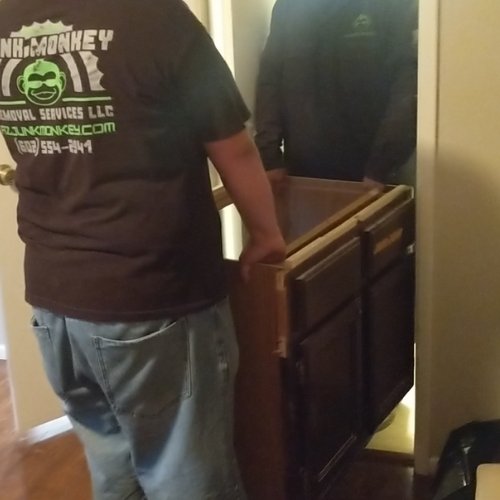
Access is where remote cleanouts most often break down, so settle it early. Decide who holds the keys, how they will be handed off, and when the crew can enter.
Use a simple process:
- Give one local contact the keys, and make a copy of the key log. If the property belongs to an elderly relative, this junk removal guide for elderly residents covers arranging access in that situation.
- Ask the contact to photograph each room, closets, the garage, and any outbuildings.
A video walkthrough shows problems a photo misses, such as water damage, pests, or items stored in hard-to-see spaces. Once you review the footage, confirm the scope matches what you see.
Creating a Remote Estate Cleanout Communication Plan
Clear communication keeps a long-distance cleanout on track. Set rules for how updates flow before work starts.
Use this checklist:
- Name one primary contact for the provider and one for the heirs.
- Agree on a daily or weekly update schedule.
- Choose a shared folder for photos, logs, and receipts.
- Set a response window for approvals, such as 24 hours.
- Agree how disagreements will be settled, such as a family call or executor decision.
Disagreements among heirs are common. Decide early how you will handle them so the crew is not left waiting in the driveway.
Sorting Belongings, Handling Sensitive Items, and Documenting Decisions
Sorting is the heart of the job, and the items that cause the most trouble are rarely the furniture. Work room by room and sort every item into one of four groups: keep, donate, sell, or discard, but run a sensitive-items sweep before the general sort begins.
Run the sensitive-items sweep first. Before any crew arrives, have your local contact walk the property with a checklist and a locked bag or box. The goal is to remove or secure anything that should never be handled by a cleanout crew:
- Documents: deeds, titles, wills, trusts, insurance policies, tax returns, bank and brokerage statements, and military discharge papers (DD-214).
- Financial and identity items: checkbooks, credit cards, statements with account numbers, passports, Social Security cards, and birth certificates.
- Medications: prescription bottles and any controlled substances. Do not let these go into general trash; many communities have take-back programs or pharmacy drop-off (the FDA).
- Firearms: unload and secure them, and confirm transfer rules before moving any firearm across state lines.
- Jewelry, cash, and coins: photograph, log, and move to a safe deposit box or a locked location off site.
- Personal data: laptops, phones, external drives, and paper records with account numbers. Wipe devices or remove drives before disposal, and shred paper records or use a bonded shredding service that provides a certificate of destruction.
Watch out: leaving a deed or a handgun in a drawer “for the crew to deal with.” Both are common causes of post-cleanout disputes and, for firearms, potential legal exposure.
Then sort by room. Finish one room before moving to the next. Photograph every keep item with a short note, and log every removal with the date, item description, and destination.
Document decisions as you go. A simple shared spreadsheet with columns for room, item, decision (keep/donate/sell/discard), approver, and date is enough. Donation receipts and disposal records protect you if questions come up later; ask your provider for receipts showing where donated goods went and keep them with the estate file. For guidance on donating items after an estate cleanout, see how to route the pieces you want to keep out of the trash.
Build a remote quality-control trail. Because you cannot see the work in person, require the provider to send a dated photo or short video at three points: before work begins, at the midpoint, and at completion. Compare the completion footage against your keep list and off-limits log before you release final payment. A repeatable photo and video checklist, an inventory log, and a written approval trail are what let an absent decision-maker verify the work rather than take it on faith.
Your Remote Estate Cleanout Checklist and Next Step
Use this checklist to keep the job organized from start to finish:
- Confirm legal authority and any probate paperwork.
- Name a local point of contact and share keys securely.
- Get written, itemized quotes from at least three providers.
- Review photos or video before work begins.
- Set the timeline and communication schedule.
- Sort items into keep, donate, sell, or discard.
- Log all donations, sales, and disposal.
- Confirm the final walkthrough by video.
Managing an estate cleanout from another state is manageable with the right plan and a reliable local partner. Call or text Arizona Junk Monkey Removal Services today for a no-obligation estimate, and let us help you clear the property with licensed, insured, and documented service.
Frequently Asked Questions
What is the best way to clean out an estate?
The most reliable approach is to sequence the work: confirm legal authority first, sort keepsakes and valuables before any bulk removal, then schedule a licensed, insured provider to handle the remaining furniture and debris. Working from a written scope with photos keeps the job on track when you cannot be present. Pricing depends on volume, access, and disposal requirements, so request a written estimate from the provider you choose and confirm current rates on their website or by calling for a quote.
How long does an estate cleanout take?
Timing depends on the size of the home, how much is stored, how many decisions heirs need to make, and how quickly sorting can happen. A small apartment may be cleared in a single day, while a full house with decades of belongings can take several weeks of sorting plus one or more removal visits. Building in time for family review and any probate-related approvals before booking the removal date prevents rushed decisions.
How can I manage an estate cleanout from another state?
Appoint a local point of contact who can provide property access, a key handoff, and on-site photos or a video walkthrough. Send the provider a written scope of work, set a single approval process for any item over a value you agree on, and schedule regular check-ins. Ask for documented donation and disposal receipts so you can verify what happened to the contents without being on site.
Who can clean out a house after someone dies?
Typically the executor or estate administrator named in the will, or a court-appointed representative if there is no will, has the authority to direct the cleanout. Heirs may need written consent before items are removed or sold. Confirm your authority with the probate court or estate attorney before any belongings leave the property, and share that documentation with the cleanout provider.