

Quick Summary
Estate cleanout cost is calculated from five factors: home size, volume of belongings, labor, disposal fees, and access conditions. Measure each one before calling providers, then compare quotes line by line so the total reflects the same scope.
- Start with square footage, then adjust upward for heavy accumulation and attic or basement contents.
- Convert belongings into truckloads, using a 15-cubic-yard dump truck as the reference unit.
- Ask for disposal and landfill fees to be itemized separately from labor.
- Confirm in writing how donations and resale credits reduce the final bill.
- Note stairs, driveway distance and gated access, since these change labor time.
Table of Contents
- What Drives Estate Cleanout Cost
- Step 1: Estimate Cost by Home Size and Square Footage
- Step 2: Measure Volume of Belongings and Crew Time
- Step 3: Add Disposal, Donation and Hazardous Item Costs
- Step 4: Adjust for Access, Stairs and Location
- Whole House Cleanout Cost and Hoarder Home Cost Scenarios
- Checklist for Comparing Written Estate Cleanout Quotes
- Booking Your Estate Cleanout Estimate With Arizona Junk Monkey
- Frequently Asked Questions
What Drives Estate Cleanout Cost
Last Updated: November 14, 2026

Estate cleanout pricing is not a flat rate. Two houses of the same size can cost very different amounts to clear, depending on how much is inside, how hard it is to reach, and where the items end up. Knowing the factors behind any estate cleanout cost before you call is the fastest way to avoid a surprise bill.
Most estate cleanout estimates come down to five things: the size of the home, the volume of belongings, the labor required, disposal costs, and access conditions. Each one can be measured or estimated before anyone arrives. For families dealing with heavy contents, a Hoarding Cleanup Service provider can also assess the scope early in the process.
Many families find that quotes vary most because the scope was never clearly defined. A quote that covers only the garage can look far cheaper than a full-home clearing, even when both are called “estate cleanouts.” Ask each provider exactly what the price includes.
Step 1: Estimate Cost by Home Size and Square Footage
Home size is the starting point for most estimates. A larger house usually holds more belongings, takes longer to empty, and generates more material to haul away. Providers commonly use square footage or room count to build a rough baseline before looking at contents.
Square footage alone is not enough, though. A 1,500-square-foot home that was lived in for 40 years can hold far more than a newer house of the same size. Use square footage as a first estimate, then adjust it based on how full the home is.
Quick estimate method:
- Measure total square footage (or count rooms, including garage and storage areas)
- Note how many rooms are filled with contents versus mostly empty
- Use the provider’s per-square-foot or per-room baseline as a starting point
- Adjust upward for heavy accumulation, attic and basement contents, or outbuildings
Step 2: Measure Volume of Belongings and Crew Time
Volume is the single biggest driver of labor cost. Crews price by how much material they must sort, carry, and load, so a packed three-bedroom home costs more than an emptier one of the same size. The goal of this step is to convert what you see in the house into the same units a provider uses on a quote: truckloads, cubic yards, crew hours, and weight.
Estimate volume by room, then convert to truckloads. Walk each room and estimate what fraction of a standard 15-cubic-yard dump truck it would fill. Add the fractions across the house to get a total truckload estimate. Most haulers price either by the load or by the cubic yard, so this number is the one to compare against their rate sheet. If you only need to haul a few large pieces rather than a full estate, Furniture Removal services can handle those items separately.
Translate volume into crew hours. Build the labor line yourself rather than guessing:
- Count the rooms and outbuildings to be cleared.
- Assign each a rough hour figure based on how full it is (light, moderate, heavy).
- Multiply total hours by the crew size the provider proposes.
- Multiply crew hours by the quoted hourly rate to check whether the labor line is reasonable.
If the same job is quoted at a flat price, divide the flat price by your estimated crew hours to see the implied hourly rate and compare it to local labor norms.
Separate hauling from labor. Many quotes bundle labor and hauling into one number. Ask for the truckload or cubic-yard rate separately, because disposal is billed on top of labor in most full-service jobs. A job that fills three trucks should show three hauling units, not a single opaque total.
Watch out: Estates with decades of stored items often need extra sorting time for documents, keepsakes, and items the family wants to keep. Sorting slows the crew down, so ask whether sorting time is billed separately and whether the crew will set aside keep-items or only haul everything out.
Build a quick volume worksheet. Before calling, write down for each room: approximate square footage, fullness (light, moderate, heavy), whether stairs are involved, and any items too heavy to move without disassembly. That worksheet lets you sanity-check every quote against the same inputs and exposes providers who lowball volume to win the job and raise the price later.
Step 3: Add Disposal, Donation and Hazardous Item Costs
Disposal fees are often the most overlooked line item, and they are also where quotes diverge most. Landfill and transfer station charges are generally billed by weight or by volume, and they add up quickly with furniture, mattresses, and building materials. To calculate this line yourself, estimate the weight or volume of what will actually be hauled, then apply the local tipping fee the provider passes through. Ask for the tipping fee and any minimum charge in writing so you can verify the disposal line rather than accept a lump sum.
Itemize the disposal line. Separate these costs when comparing quotes:
- General disposal and landfill fees, stated per ton or per cubic yard
- Recycling or metal handling, which may be lower or waived because scrap metal has resale value
- Mattress, tire, and appliance fees, which many facilities charge separately (a dedicated Mattress Removal or Appliance Removal service can sometimes be priced on its own)
- Donation pickups, which can reduce disposal volume and therefore the tipping fee
- Hazardous items such as paint, batteries, propane tanks, or old electronics, which usually cost extra
Hazardous and special-handling items. Standard cleanout crews are not equipped to handle every item. Ask each provider which of these items are included, which are excluded, and what the separate fee is. A quote that silently excludes hazardous material can look cheaper and then grow once the crew arrives.
How donations and resale credits affect the bill. Donations and salvage can offset part of the bill, but the mechanism matters. Some providers credit resale value or donate usable furniture and appliances and reduce the disposal line accordingly; others keep the resale proceeds and charge full price. Ask three questions before hiring: Does the provider credit any resale value back to you, or is it built into the price? Will donations be itemized with a receipt or donation log you can use for tax documentation? Are credits applied to the invoice or paid separately? Get the credit policy in writing, because an oral promise of “we’ll donate what we can” is not a calculable offset.
Selling valuable items first. Some families sell high-value items before the cleanout starts, which reduces the volume to haul and can offset part of the cost. If you go this route, document what was sold and for how much, and tell the provider which items are staying so the crew does not remove them by mistake.
Watch out: A quote that lists disposal as a single “dump fee” without a per-ton or per-cubic-yard rate cannot be verified against the actual landfill charge, so ask for the pass-through rate and the facility name before signing.
Step 4: Adjust for Access, Stairs and Location
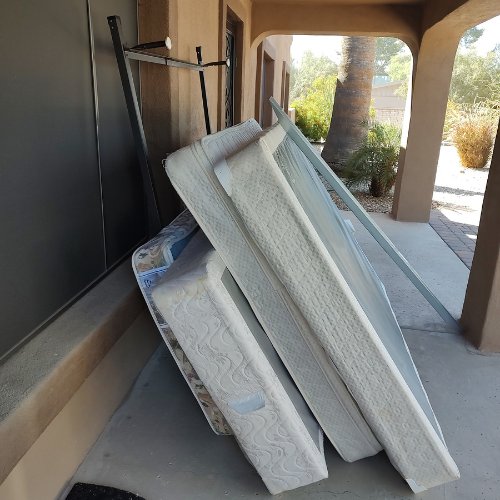
Access conditions change labor time. A ground-floor home with a wide driveway is far easier to clear than a second-floor unit reached by narrow stairs. Note these conditions before requesting a quote:
- Number of flights of stairs and whether the path is clear
- Distance from the truck to the front door
- Gated properties, locked storage units, or tight driveways
- Heavy items that need disassembly to move
Location also matters. Disposal sites, labor rates, and travel time differ by area. A property far from the provider’s base may carry a travel or mobilization charge. Ask how the provider handles distance.
Whole House Cleanout Cost and Hoarder Home Cost Scenarios
A whole-house cleanout usually costs more than a single-room job because it combines all the cost factors above. The cost range depends mainly on how full the home is and whether special handling is needed.
Scenario comparison (illustrative, not a price quote):
| Scenario | Main cost drivers | What to ask the provider |
|---|---|---|
| Lightly furnished home | Labor and a few truckloads | Is sorting included? |
| Full estate, normal condition | Volume, disposal, possible donations | Which items are credited or donated? |
| Hoarder home | Heavy volume, safety precautions, extended crew days | Is biohazard or hazardous material handling included? |
How much does it cost to clean out a hoarder house? It depends on the volume, the condition of the home, and how many crew days are needed. Hoarder homes often take longer because the crew must work safely through clutter and may need additional protective equipment. Expect a hoarder cleanout to be priced well above a standard estate job of the same size. Read the safety and process steps for clearing a hoarder house before the crew arrives. Request a site visit before accepting any written estimate.
For a broader look at how these jobs are planned, see What to Expect During Estate Cleanout: A Complete Guide before comparing quotes.
Checklist for Comparing Written Estate Cleanout Quotes
Use this checklist to compare quotes on equal terms:
- Scope is stated (whole house, garage only, or specific rooms)
- Labor is listed by crew size and estimated days
- Disposal and landfill fees are itemized
- Donation and resale credits are shown separately
- Hazardous item handling is priced or excluded in writing
- Stairs, access, and travel charges are addressed
- Sorting time and any extra services are clearly stated
- Insurance and licensing details are confirmed
- The quote is valid for a stated period
A quote with a lower total may still cost more if it leaves out disposal or sorting. Compare the line items, not just the bottom number.
Booking Your Estate Cleanout Estimate With Arizona Junk Monkey
Arizona Junk Monkey Removal Services provides no-obligation estimates for residential and commercial cleanouts, and the business is licensed and insured. Pricing depends on quantity, dates, and delivery, so contact the team for a current quote based on your property. Call or text today to schedule an estimate.
Frequently Asked Questions
How much does an estate cleanout cost?
Estate cleanout pricing depends on the home’s square footage, the volume of belongings, crew size and hours, disposal fees, and property access. Because no published price list covers every situation, Arizona Junk Monkey Removal Services provides a no-obligation estimate after reviewing the property. Pricing varies with quantity, dates and delivery needs, so request a written quote to see the figure for your specific home before you schedule.
Is estate cleanout pricing based on square footage or the amount of junk?
Square footage gives a rough starting point, but the amount of material removed usually drives the final cost. A sparsely furnished 2,200-square-foot house may cost less than a crowded smaller home with decades of accumulated belongings. Most reliable quotes combine both factors: the size of the home sets the expected labor window, and the volume of contents determines crew hours and disposal load.
What should I check on a written cleanout quote?
Confirm what the quote includes, such as labor, loading, hauling, disposal fees and any sorting or donation work. Ask whether charges are fixed or hourly, whether stairs or difficult access add cost, and how hazardous or special items are handled. Verify the company is licensed and insured, and ask how the final bill is calculated if the volume differs from the estimate.
Can sale proceeds or donations lower the cleanout cost?
Items with resale value or those accepted by donation partners may reduce the net cost, but only if the provider credits them against the bill. Arizona Junk Monkey Removal Services emphasizes eco-friendly disposal and donation practices, so ask during your estimate which items can be donated or recycled and how any salvage value would affect the final invoice.