

Table of Contents
- How Local Junk Removal Services Work
- Step 1: Request an On-Site Estimate
- Step 2: Understand Factors Influencing Removal Costs
- Step 3: How to Prepare for Junk Removal
- Step 4: Schedule Same-Day or Next-Day Pickup
- Junk Removal vs. Dumpster Rental: Which Is Right for You?
- Using a Junk Removal Cost Estimator
- What Items Are Accepted and How Eco-Friendly Disposal Works
- Frequently Asked Questions
Last Updated: September 30, 2026
How Local Junk Removal Services Work
A local junk removal service is a professional hauling company that removes unwanted items from your home or business, handles disposal responsibly, and recycles or donates what can be reused, taking the physical work entirely off your hands.
The process is straightforward: contact the company, describe what needs to go, receive an estimate, schedule pickup, and the crew hauls everything away. Arizona Junk Monkey Removal Services offers no-obligation estimates.
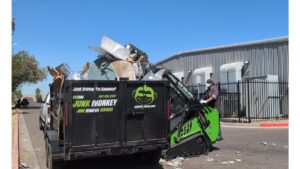
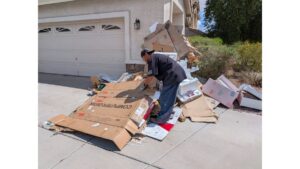
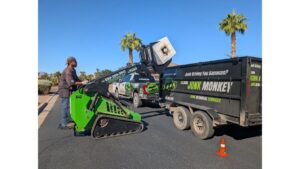
You don’t lift a finger. The crew handles loading, transport, and disposal of appliances, furniture, and construction debris, saving time and eliminating multiple trips to landfills or donation centers.
Many people assume junk removal is only for large-scale cleanouts. In reality, most services handle small jobs too, a single broken refrigerator, a few pieces of furniture, or a garage corner that’s accumulated clutter over years. Ask about minimum job sizes when you call.
Step 1: Request an On-Site Estimate
The first step in booking a local junk removal service is requesting an on-site estimate. This is where the company assesses what you have, determines the volume and weight, and provides a binding price before any work happens.
Describe items specifically (“broken washer and dryer” rather than “old appliances“). The company will ask about accessibility, basement, upstairs, stairs, tight doorways, since these details affect labor time and pricing.
Arizona Junk Monkey Removal Services offers no-obligation estimates. You see the estimate, approve it, and that’s the price you pay, no surprise add-ons.
Step 2: Understand Factors Influencing Removal Costs
Several variables determine pricing for a local junk removal service. Volume is primary, but item type, location, and disposal method also matter.
Appliances require special handling for refrigerants and hazardous materials (the EPA). Heavy items like hot tubs demand extra labor. Lightweight items like clothing cost less than furniture.
Accessibility affects pricing. Curbside items cost less than those requiring navigation of stairs, hallways, or basements. Urban and rural locations may differ in pricing.
Disposal fees vary by item type. Donations often cost less than landfill disposal since donation centers don’t charge intake fees.
Same-day or next-day scheduling costs more than booking a week ahead. Holidays and weekends may carry premiums.
Avoid companies that quote prices over the phone without seeing your items. Estimates made without an on-site visit often lead to surprise charges when the crew arrives and discovers more stuff than expected or items that require specialized handling.
Step 3: How to Prepare for Junk Removal
Proper preparation reduces crew time and your final bill, prevents delays and forgotten items, and ensures safety.
One week before:
- Decide what goes. Identify every item for removal. Ask: “Have I used this in the past year? Do I have emotional attachment? Would I pay to store it?” If no to all three, it’s removal material.
- Separate keepsakes from clutter. Move antiques, collectibles, heirlooms, and sentimental items to a different room. Mark them clearly so the crew doesn’t accidentally remove them.
- Check for hazardous materials. Identify paint, batteries, propane, chemicals, motor oil, and pesticides. Call your service provider about their hazardous waste policy, as many charge extra or refuse these items. Research local hazardous waste facilities if needed.
Three days before:
- Consolidate items into central locations. Group everything into one or two rooms (garage, spare bedroom, basement) so the crew works faster.
- Clear pathways. Remove obstacles between items and the truck. Move couches blocking hallways and boxes blocking closets so the crew has easy access.
- Disassemble large furniture if possible. Remove legs from tables, take shelves off units, and separate components. Stack neatly, especially for tight spaces like upstairs bedrooms or basements.
One day before:
- Secure loose items. Tape boxes and bags shut. Wrap breakables to prevent spills during transport.
- Take photos for your records. Photograph items for insurance, tax deduction, or documentation purposes.
- Confirm the appointment. Call or text to confirm your time window, get the crew’s phone number, and verify payment methods and deposit requirements.
- Plan for access. Provide gate codes, unlock doors, or be home to let the crew in. Access delays may result in additional charges.
Morning of pickup:
- Do a final walkthrough. Make sure all items for removal are accessible and grouped together. Remove any items you’ve changed your mind about. Double-check that nothing you want to keep is mixed in with the junk.
- Clear the work area. If the crew is removing items from a garage, basement, or bedroom, make sure they have room to maneuver. Move cars out of the driveway if needed. Clear a path from the items to the truck.
- Be home and available. Have someone present during the pickup. The crew may have questions about what’s included, where items are located, or whether certain items should be removed. Being available prevents misunderstandings and ensures the job is completed as expected.
- Document the completion. Once the crew finishes, do a quick walkthrough to confirm everything you wanted removed is gone. If items were left behind by mistake, point them out immediately so the crew can load them before leaving.
Special preparation for specific situations:
Estate cleanouts: Sort items into keep (heirlooms, valuables), donate (good furniture, clothing), and remove (broken items) to prevent accidental loss.
Post-eviction cleanouts: Remove tenant belongings, sweep debris, and identify items needing special handling so the crew focuses on hauling.
Basement or attic cleanouts: Clear paths to stairs or exits. Stabilize fragile items. Warn the crew about low ceilings, narrow stairs, or uneven flooring.
Appliance removal: Unplug appliances and ensure accessibility. Confirm the crew can navigate stairs or tight doorways, as difficult removals may incur extra fees.
Proper preparation can reduce your junk removal cost by 15-30% because the crew spends less time on your job. A well-organized space that takes 1.5 hours to clear might cost $350, while a chaotic space requiring sorting and navigation might take 3 hours and cost $600. The difference pays for your preparation effort.
Step 4: Schedule Same-Day or Next-Day Pickup
Most local junk removal service providers offer same-day and next-day scheduling. Same-day pickup works when you call in the morning; next-day scheduling gives you time to prepare.
Confirm the time window, get the crew’s phone number, and ask about payment methods. Arizona Junk Monkey Removal Services accepts cash, check, credit/debit cards, and Zelle. Ask about deposit requirements and cancellation policies.
The best time to schedule removal is when you have the space clear and ready. Rushing a junk removal appointment often leads to incomplete jobs or items left behind because the crew ran out of time.
Junk Removal vs. Dumpster Rental: Which Is Right for You?
The choice between hiring a local junk removal service and renting a dumpster depends on your situation, timeline, budget, and the volume of items you need to remove. Understanding the trade-offs helps you avoid overpaying or choosing the wrong solution.
Cost comparison:
Junk removal is priced per truckload or volume.
Timeline and labor:
Space and logistics:
Disposal responsibility:
Decision framework:
- Choose junk removal if: You have a defined set of items to remove, want the job done in one visit, prefer not to lift heavy items, need quick turnaround, or live in a space without dumpster access.
- Choose dumpster rental if: You’re doing a multi-week renovation or construction project, generating junk gradually, prefer to load items yourself at your own pace, or have a large volume of debris that would require multiple junk removal trips.
Real-world scenario:
Junk removal is faster and requires no physical labor; dumpster rental is cheaper for multi-week projects and high-volume debris. Match the solution to your timeline, physical ability, and space constraints rather than cost alone.
Using a Junk Removal Cost Estimator
Some companies offer online junk removal cost estimator tools to give you a ballpark figure before requesting an on-site visit. These tools typically ask you to select item types and quantities, then calculate an estimated price range.
What Items Are Accepted and How Eco-Friendly Disposal Works
Most local junk removal service providers accept many items: furniture, appliances, electronics, yard waste, construction debris, and general household clutter. However, some items require special handling.
Commonly accepted items:
- Furniture (couches, chairs, tables, dressers)
- Appliances (refrigerators, washers, dryers, ovens)
- Electronics (TVs, computers, printers)
- Mattresses and box springs
- Yard debris (branches, leaves, mulch)
- Construction materials (drywall, lumber, concrete)
- Boxes and bags of miscellaneous items
Items often restricted or requiring extra fees:
- Hazardous materials (paint, batteries, propane, chemicals)
- Tires and automotive waste
- Medical waste or biohazard materials
- Large quantities of soil or heavy rock
Frequently Asked Questions
How much does local junk removal service cost?
Pricing for local junk removal service depends on several variables: the volume and weight of items, the type of materials being removed, your service location, and whether you need same-day pickup. Rather than guessing at costs, the best approach is to request an on-site estimate from a licensed and insured provider. They’ll assess your specific situation and provide clear pricing. Contact us for a free, no-obligation estimate tailored to your needs.
What items won’t junk removal services take?
Most professional junk removal services accept furniture, appliances, construction debris, and general household clutter. However, hazardous materials like paint, chemicals, batteries, and propane tanks typically require special handling or cannot be accepted. Some services also decline items that are extremely heavy without proper equipment or materials contaminated with mold or biohazards. Always confirm what’s accepted before booking. When you call for your on-site estimate, describe your items so the crew can let you know if everything qualifies for standard removal or if any items need alternative disposal.
How quickly can I schedule junk removal?
Many local junk removal providers offer same-day and next-day scheduling options, making it convenient for homeowners and landlords who need fast turnaround. Availability depends on current demand and your service area. When you request your on-site estimate, ask about appointment availability. For urgent situations like post-eviction cleanouts or emergency debris removal, mention your timeline so the crew can prioritize your booking accordingly.
Do junk removal services actually recycle and donate items?
Reputable local junk removal services prioritize eco-friendly disposal by donating usable furniture, appliances, and household goods to charities and recycling centers rather than sending everything to the landfill. This approach benefits the community and reduces waste. When booking, ask your provider about their donation and recycling practices. Licensed and insured companies typically track and report what gets donated versus recycled, so you can feel confident your items are handled responsibly.